Maldon Sea Salt
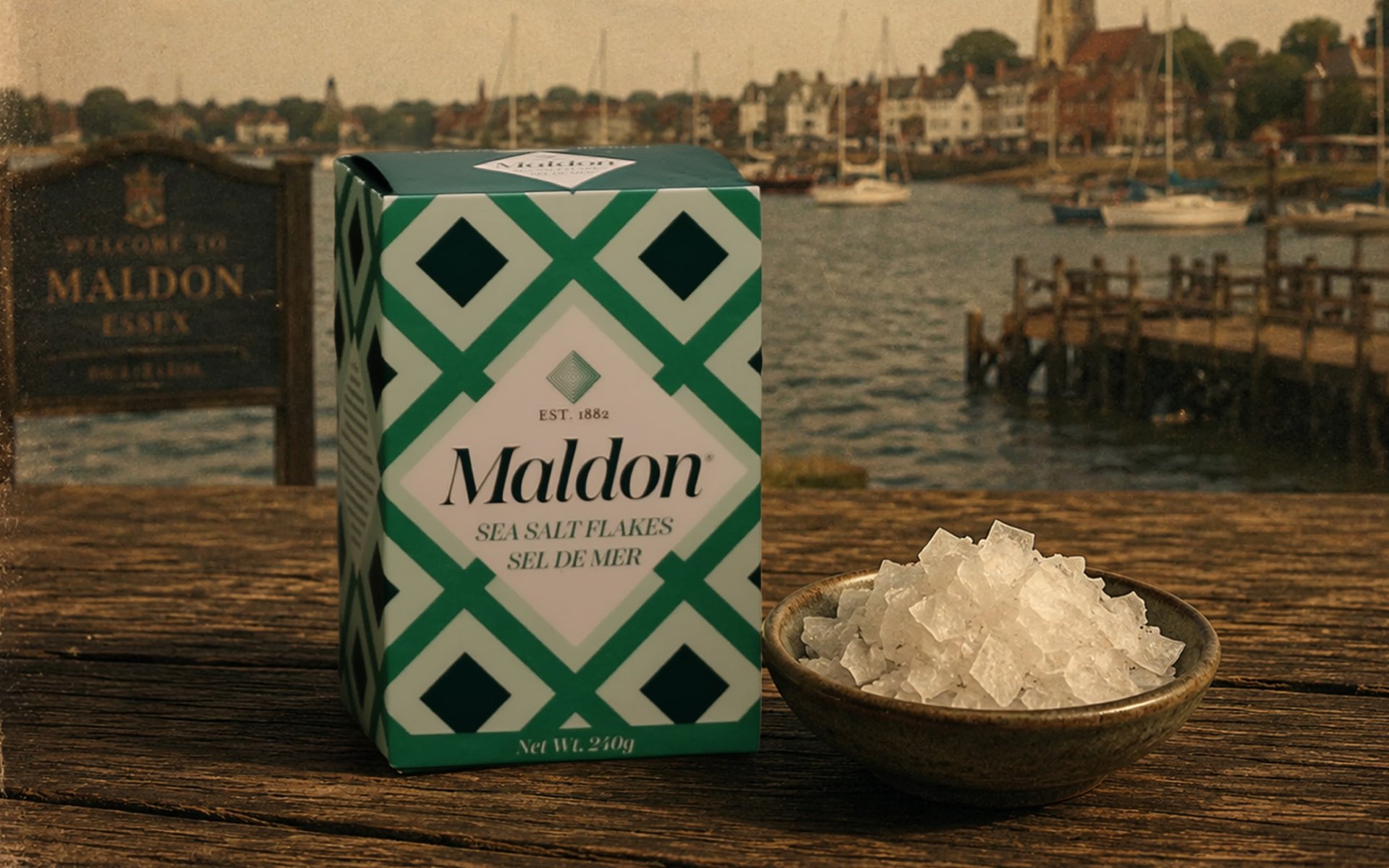
In the culinary world, salt is far more than a basic seasoning used simply to add saltiness. It is a fundamental ingredient capable of elevating the depth of flavor, aroma, and texture of food in remarkable ways. For this reason, professional chefs often place as much importance on selecting the right type of salt as they do on choosing the main ingredients of a dish.
Among sea salts from around the world, Maldon is widely recognized as one of the most respected sea salts among professional chefs, Michelin-starred restaurants, gourmets, and cooking enthusiasts worldwide.
The Unique Pyramid Crystal Structure of Maldon Sea Salt
What makes Maldon unique is its distinctive crystal structure. The salt forms delicate pyramid-shaped flakes that are light, crisp, and easily crushed between the fingers, setting it apart from ordinary salt. When sprinkled over food, the flakes dissolve gradually on the palate, delivering a clean and gentle salinity while adding texture and complexity to dishes in a uniquely refined way.
Thanks to its clean, mellow flavor that is never overly harsh, Maldon Sea Salt is especially popular as a “finishing salt” — used to finish dishes just before serving. It is commonly sprinkled over steaks, fish, seafood, salads, roasted vegetables, desserts, and even chocolate, enhancing the natural flavors of ingredients without overpowering them.
The Origins of Maldon Sea Salt in Essex, England
Maldon Sea Salt has an exceptionally long history, originating in the town of Maldon in Essex, on the eastern coast of England. The town is located along the Blackwater Estuary, where freshwater from rivers meets seawater from the North Sea.This unique geographical setting, combined with the dramatic tidal movements of the Blackwater Estuary, creates seawater with unusually high mineral concentrations — especially during “Spring Tides,” when large volumes of seawater flow into the estuary.
In addition, Essex receives relatively low rainfall compared to many other regions in England, meaning the seawater is less diluted and retains ideal salinity and mineral levels for producing high-quality sea salt.
These environmental conditions are key reasons why Maldon Sea Salt possesses such distinctive characteristics, including its clean salinity, pure flavor profile, and uniquely structured crystals that differ significantly from ordinary sea salt. Today, it is recognized as one of the world’s most prestigious premium sea salts.
Ancient Sea Salt-Making Traditions in Maldon
The tradition of extracting salt from seawater in Maldon dates back more than 2,000 years. Archaeological evidence suggests that from the Iron Age through the Roman Britain period, local communities had already developed organized sea salt production methods.
One of the most important archaeological traces is the presence of large red mounds known as “Red Hills,” found scattered along the Blackwater Estuary. These are believed to be remnants of ancient salt-making operations. Early inhabitants shaped clay into crude vessels, filled them with seawater, and heated them over fires until the water evaporated, leaving behind salt crystals used for food preservation and daily consumption.
During the Roman Britain era, the Romans further improved salt production in the area by constructing clay-lined evaporation tanks to increase efficiency in extracting salt from seawater.
Maldon in the Domesday Book
Historical evidence also appears in the Domesday Book, the great survey of England commissioned by King William I (William the Conqueror) in 1086. The document mentions salt production in Maldon and records as many as 45 saltworks operating in the area, reflecting Maldon’s importance as one of England’s major sea salt production centers.
The Establishment of Maldon Salt Company
Although salt production in Maldon had existed for centuries, the transition from small-scale local production to a structured commercial enterprise began during the late 19th century, during the Industrial Revolution in England.
In 1882, The Maldon Crystal Salt Company (now known as Maldon Salt Company) was officially established. Its mission was to transform traditional local sea salt into a refined commercial product with consistently high standards.
One of the defining characteristics of Maldon’s production process was the creation of pure salt flakes with clean flavor and beautifully structured crystals. This was achieved through traditional methods passed down through generations.
Producing this type of salt requires immense skill, experience, and precision in controlling temperature, timing, and evaporation rates, as these factors directly affect the size, thinness, crispness, and iconic pyramid shape of the salt crystals.
The Osborne Family and the Legacy of Maldon Sea Salt
Initially, the company operated successfully under local ownership. However, a major turning point came when the Osborne family became involved in the business.
In 1922, James Osborne acquired Maldon Salt Company and began further refining its production standards. He played a vital role in establishing quality control systems for seawater boiling and carefully managed every stage of production, from seawater selection to temperature regulation and crystal formation.
Beyond improving quality, James Osborne also expanded distribution to premium grocery stores in London, helping Maldon Sea Salt gain recognition among high-end consumers and Britain’s fine food industry.
The second generation, Cyril Osborne, took over during the periods surrounding World War I and World War II, when many British industries faced severe shortages of labor, raw materials, and fuel.
Despite the economic pressures and wartime limitations, Cyril remained committed to preserving traditional production methods. Rather than adopting large-scale industrial systems or mechanized mass production, he believed that handcrafted production and meticulous control were essential to maintaining Maldon’s unique identity.
In the 1970s, the third generation, Clive Osborne, assumed leadership during a time when processed foods and inexpensive industrial table salt dominated the market. Realizing that Maldon could not compete on price, Clive repositioned the brand as a gourmet product aimed at chefs and fine dining establishments.
This strategy proved highly successful. Maldon Sea Salt began appearing in the kitchens of luxury restaurants across Britain before gradually expanding into international culinary markets.
Later, the fourth generation, Steve Osborne, continued the family legacy. Under his leadership, the brand expanded globally and began exporting to more than 60 countries worldwide. Although the packaging was modernized, the company continued producing salt using the same traditional methods in the historic Maldon saltworks.
The Traditional Maldon Sea Salt Production Process
Maldon’s production process still relies on the traditional practice of slowly boiling seawater from the Blackwater Estuary in large pans. As the water gradually evaporates under carefully controlled temperatures, pyramid-shaped salt crystals naturally begin to form on the surface before being carefully harvested by hand.
Steve Osborne once famously stated, “The art of salt making is all about temperature and time,” emphasizing how delicate temperature control directly determines whether the crystals develop their desired shape.
Maldon Sea Salt and the Royal Warrant from Queen Elizabeth II
In 2012, the company reached one of the most significant milestones in its history when Queen Elizabeth II of the United Kingdom granted Maldon Salt Company a Royal Warrant as an official supplier of sea salt to the British Royal Household.
Receiving a Royal Warrant is considered one of the highest honors for a British business and is granted only to companies that have supplied goods or services to the Royal Household for at least five consecutive years while meeting rigorous standards in product quality, manufacturing excellence, environmental sustainability, and business ethics.
For the Osborne family, the Royal Warrant represented more than just a symbol of prestige. It reflected the exceptional quality, craftsmanship, and production standards that had earned recognition at the highest level in the United Kingdom.
Today, Maldon Sea Salt remains one of the most respected finishing salts in the culinary world — valued not only for its flavor and texture, but also for the centuries of craftsmanship, tradition, and heritage preserved within every crystal.