Kamada Soy Sauce
A Legacy Born in the Edo Period
The history of Kamada Soy Sauce began in 1789 (the first year of the Kansei era) during Japan’s Edo period — an era marked by the flourishing of Japanese culture and culinary traditions. The company was founded by Uheita Kamada, who established a soy sauce brewery in the city of Sakaide, Kagawa Prefecture, on Shikoku Island.Sanuki Province: The Ideal Region for Premium Soy Sauce
Kagawa Prefecture, historically known as “Sanuki Province,” is located on Shikoku Island in southern Japan. The region’s shallow coastal areas supported salt production for centuries, and it was once recognized as one of Japan’s most important salt-producing regions. Historical records indicate that the area once supplied up to 80 percent of the nation’s total salt production. In addition, the sunny climate and expansive plains made the region ideal for cultivating wheat and soybeans — two essential ingredients in soy sauce production. Thanks to these geographical advantages, Sanuki became renowned as a center for high-quality soy sauce production from ancient times.Preserving the Craft of Traditional Fermentation
In its early years, Kamada Soy Sauce remained a small-scale brewery operating according to traditional Japanese methods, placing strong emphasis on meticulous fermentation processes. Producing soy sauce required not only time, but also the experience and expertise of skilled craftsmen to carefully control flavor, aroma, and consistency across each production batch. At the time, soy sauce production was considered a true craft that demanded a deep understanding of ingredients, weather conditions, and fermentation timing to achieve a balanced flavor profile and consistent quality. These principles eventually became the foundation of the product standards that Kamada Soy Sauce continues to uphold today. Combined with carefully refined production methods and premium local ingredients, Kamada Soy Sauce quickly gained popularity among local nobility and the general public, eventually earning recognition as one of the leading soy sauce producers in the region.Official Trademark and Brand Establishment
In 1903, Kamada Soy Sauce officially registered its trademark, marking another important milestone in the company’s history and the first step in transforming from a local soy sauce producer into a recognizable and trusted brand. At the time, trademark registration represented far more than legal ownership of a brand name — it reflected the company’s vision of establishing reliability, product consistency, and strong market recognition during a period when Japan was rapidly industrializing and modern trade systems were emerging.Three Core Philosophies Passing Down Through Generations
From the very beginning, Kamada Soy Sauce has adhered to three core business philosophies: producing the highest-quality soy sauce, serving society, and building trust. These principles have not merely existed as a slogan, but have been passed down through generations for more than two centuries.The Invention of Dashi Soy Sauce
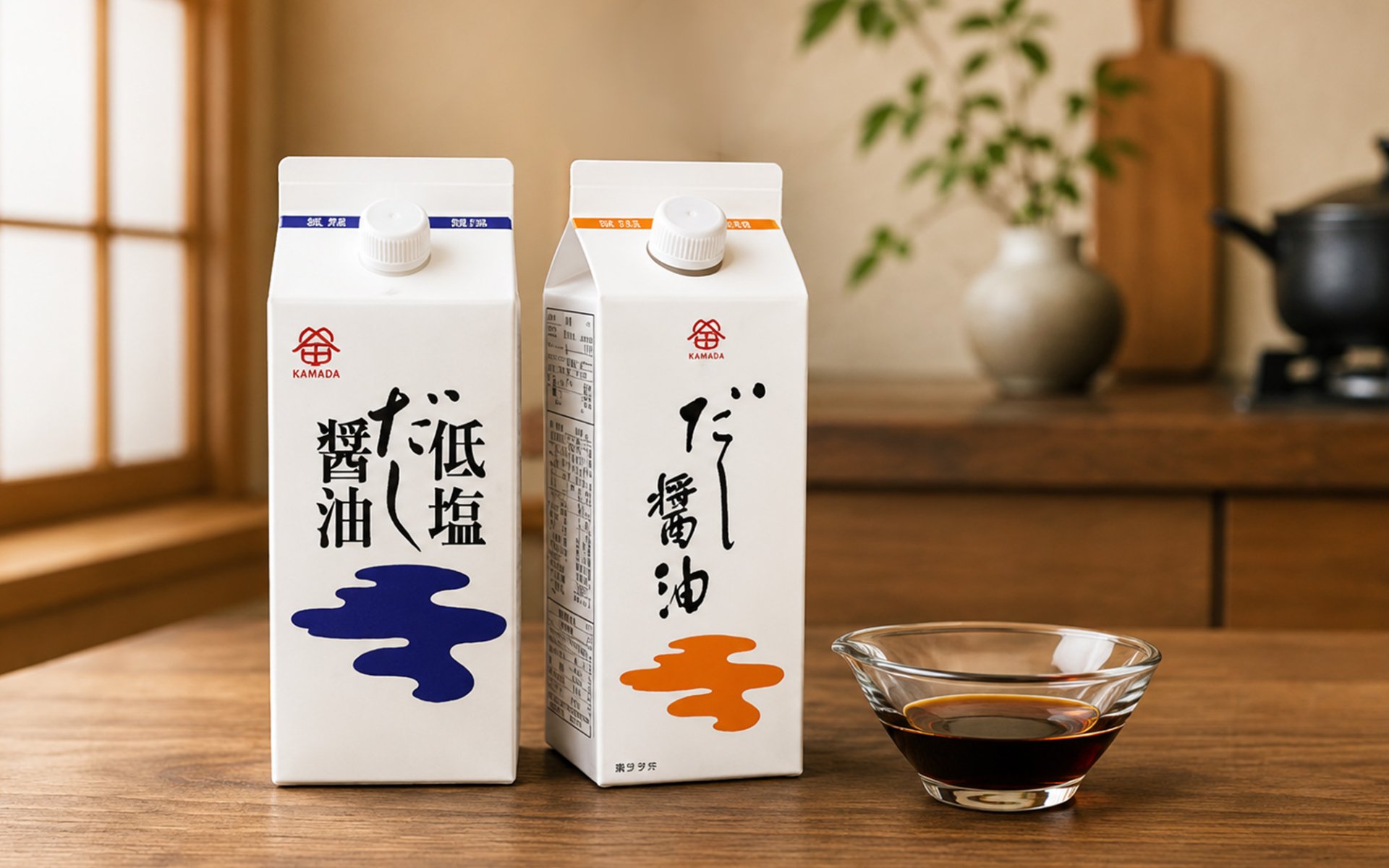
Although Kamada’s traditional soy sauce products were already successful, a major turning point came in 1963 when the company began developing what would later become Dashi Soy Sauce. Dashi has long served as the foundation of Japanese cuisine, but preparing dashi broth traditionally required time and careful attention — something increasingly difficult for busy households in modern society. Kamada Soy Sauce’s research team spent more than two years developing the formula, carefully selecting premium ingredients including dried mackerel from Yakushima Island, dried bonito from Makurazaki City, and kombu seaweed from Hokkaido. These ingredients were expertly blended with premium soy sauce, leading to the launch of Dashi Soy Sauce in 1965. This innovation represented far more than the development of a new product — it significantly transformed everyday cooking in Japanese households. Japanese homemakers no longer needed to prepare dashi from scratch, making home cooking more convenient while preserving authentic flavor.Revolutionary "Paper Pack" Packaging
Another factor that differentiated Kamada Soy Sauce from competitors was its packaging innovation. Traditionally, soy sauce was sold in glass bottles, which allowed air to enter once opened, causing oxidation that darkened the sauce and diminished its aroma over time. In 1987, Kamada Soy Sauce introduced an innovative packaging format called the “Paper Pack,” a specially designed vacuum-sealed paper carton featuring several advantages:
Protection from light and air : The multilayer foil structure shields the soy sauce from sunlight and external oxygen.
One-way valve system : When the sauce is dispensed, outside air cannot flow back into the package, helping preserve freshness, color, and aroma even after months of use.
Environmentally friendly and convenient : The lightweight packaging is durable, easy to handle, allows precise pouring control, and is easier to recycle than glass bottles.
This innovation earned Kamada Soy Sauce numerous packaging design awards in Japan and became a model for other seasoning brands to follow.
Global Expansion and E-Commerce Pioneering
After achieving remarkable success in Japan, Kamada Soy Sauce began expanding internationally. In 1987, the company launched a full-scale mail-order business, and in 1994 established a separate mail-order subsidiary called Kamada Foods International, Ltd. to support growing demand. In 1999, the company officially launched its e-commerce website, becoming one of the earliest soy sauce manufacturers to embrace online retail. During the 2000s, Kamada expanded overseas operations. In 2001, the company established Kamada Canada (KC) in Ottawa, Canada. Later, in 2005, after refining its business strategy, Kamada America (KA) was founded in Bellevue, Washington, and continues operations today.
A Modern Brand Identity and Kamada Home
In 2017, Kamada Soy Sauce introduced a newly redesigned red trademark to modernize the brand image and strengthen its visual identity. Most recently, in 2023, the company launched “Kamada Home,” a cultural and experiential space dedicated to Japanese food traditions, where visitors can explore soy sauce culture, sample products, and gain deeper insight into the soy sauce production process.
You can find Kamada Soy Sauce products at Rimping Supermarket.