Nose-to-Tail
Last updated: 4 Jun 2026
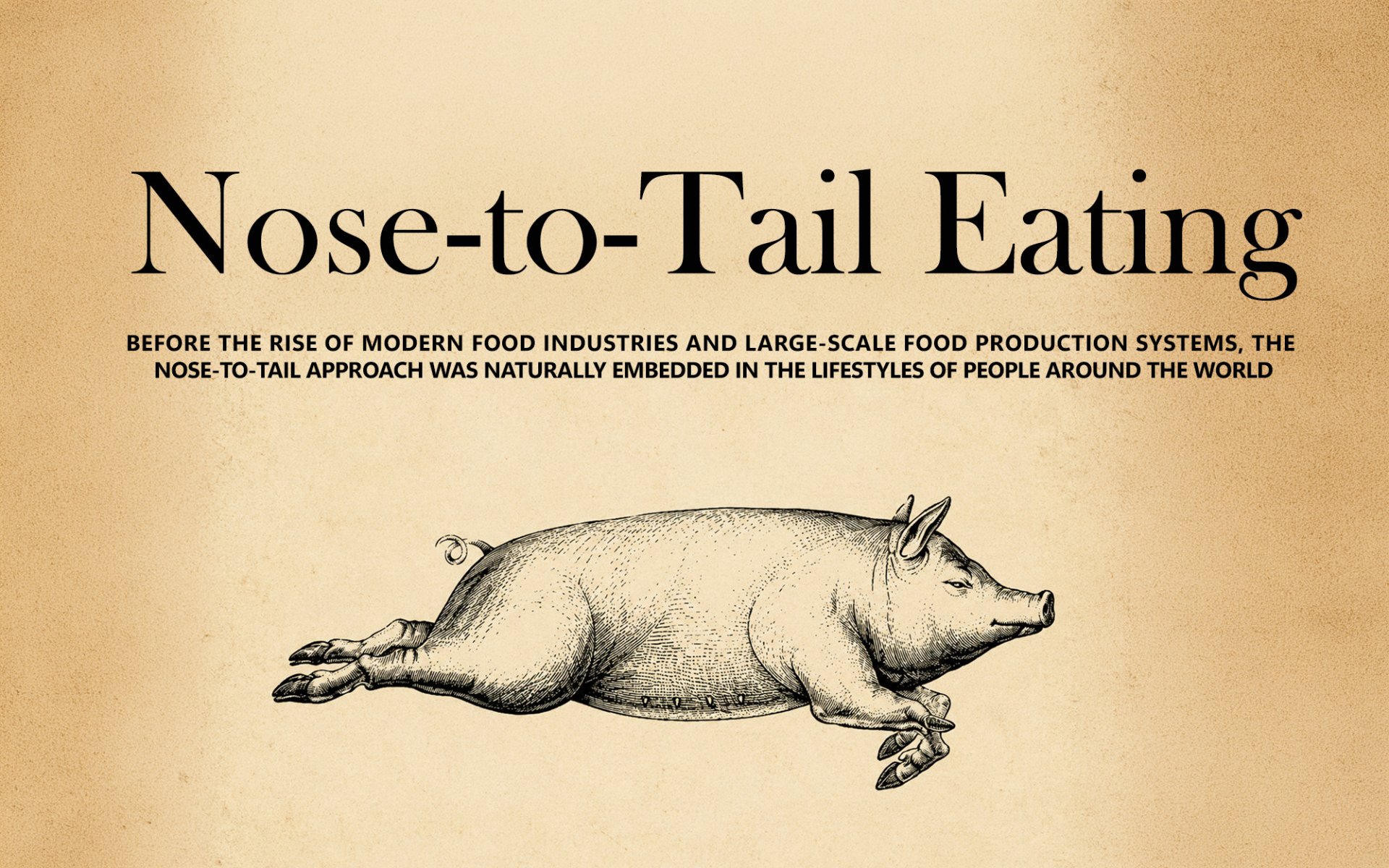
Nose-to-Tail is a culinary philosophy that emphasizes making full use of an animal—from prime cuts of meat to organs, offal, bones, fat, and other often-overlooked parts—in order to minimize waste and maximize the value of food resources.
Before the rise of modern food industries and large-scale food production systems, the Nose-to-Tail approach was naturally embedded in the lifestyles of people around the world. Whether in agricultural communities, livestock-raising societies, or hunter-gatherer cultures, nearly every part of an animal was utilized, and very little was discarded.
In many cultures, organ meats were consumed first after slaughter because they spoiled quickly. Bones were simmered into rich stocks and broths to extract maximum flavor and nutrients. Fat was rendered into cooking oil, used for candle-making, or even burned as fuel for light. Meanwhile, hides, horns, and certain bones were transformed into clothing, tools, and other everyday necessities.
This approach did not originate from modern sustainability movements or culinary trends. Rather, it was born out of necessity. People understood that raising or hunting animals required significant labor, time, and resources. As a result, cultures around the world developed traditions that valued the complete and respectful use of every animal.
However, as the modern food industry expanded rapidly during the mid-20th century, consumer habits began to change significantly. People increasingly preferred so-called “premium cuts” such as sirloin steak, ribeye, chicken breast, and pork loin—carefully trimmed and attractively packaged for convenience.
Other parts of the animal, including offal, bones, fat, and various organs, gradually lost their place at the dining table. This shift was especially noticeable in Western countries, where convenience foods and ready-to-eat products became increasingly popular.
Before entering the culinary world, Henderson studied architecture. Driven by his passion for food, he eventually became a chef and opened St. John in London in 1994. The restaurant became a platform for expressing his philosophy of respecting ingredients by transforming overlooked animal parts—such as bone marrow, tongue, heart, tail, and offal—into refined dishes that earned widespread acclaim.
In 1999, Henderson published Nose to Tail Eating: A Kind of British Cooking, which was later republished in 2004 as The Whole Beast: Nose to Tail Eating, featuring an introduction by Anthony Bourdain.
The book was celebrated not merely as a cookbook but as a thoughtful exploration of food ethics, responsibility, and the relationship between humans and the animals they consume.
At the heart of Henderson’s philosophy is the belief that using the entire animal demonstrates respect for the life that has been taken for food. Rather than consuming only the most desirable cuts and wasting the rest, he argues that making full use of the animal is both a more responsible and ethical approach.
His famous statement:
“If you're going to kill the animal, it seems only polite to use the whole thing.”
has become one of the defining principles of the Nose-to-Tail movement.
The philosophy resonated strongly with chefs, food writers, and consumers around the world, eventually becoming an important part of the global sustainable food movement of the 21st century. It has inspired countless restaurants to focus on whole-animal utilization, reducing food waste, and showing greater respect for food resources.
For example, bones can be transformed into rich, flavorful stocks; fat can be rendered into cooking fats such as beef tallow or lard; and organs and offal can become distinctive specialty dishes with remarkable depth of flavor.
As such, Nose-to-Tail is not simply about “eating every part” of an animal—it is about understanding how to use every part properly, skillfully, and deliciously.
Today, the Nose-to-Tail philosophy continues to gain relevance as consumers become more conscious of sustainability, food waste, and ethical food production. By encouraging the thoughtful use of every part of an animal, it offers a practical way to honor resources, reduce waste, and discover new culinary possibilities.
Before the rise of modern food industries and large-scale food production systems, the Nose-to-Tail approach was naturally embedded in the lifestyles of people around the world. Whether in agricultural communities, livestock-raising societies, or hunter-gatherer cultures, nearly every part of an animal was utilized, and very little was discarded.
In many cultures, organ meats were consumed first after slaughter because they spoiled quickly. Bones were simmered into rich stocks and broths to extract maximum flavor and nutrients. Fat was rendered into cooking oil, used for candle-making, or even burned as fuel for light. Meanwhile, hides, horns, and certain bones were transformed into clothing, tools, and other everyday necessities.
This approach did not originate from modern sustainability movements or culinary trends. Rather, it was born out of necessity. People understood that raising or hunting animals required significant labor, time, and resources. As a result, cultures around the world developed traditions that valued the complete and respectful use of every animal.
However, as the modern food industry expanded rapidly during the mid-20th century, consumer habits began to change significantly. People increasingly preferred so-called “premium cuts” such as sirloin steak, ribeye, chicken breast, and pork loin—carefully trimmed and attractively packaged for convenience.
Other parts of the animal, including offal, bones, fat, and various organs, gradually lost their place at the dining table. This shift was especially noticeable in Western countries, where convenience foods and ready-to-eat products became increasingly popular.
The Revival of the Nose-to-Tail Movement
The modern revival of the Nose-to-Tail philosophy began in 1999 with British chef Fergus Henderson, owner of the renowned restaurant St. John in London.Before entering the culinary world, Henderson studied architecture. Driven by his passion for food, he eventually became a chef and opened St. John in London in 1994. The restaurant became a platform for expressing his philosophy of respecting ingredients by transforming overlooked animal parts—such as bone marrow, tongue, heart, tail, and offal—into refined dishes that earned widespread acclaim.
In 1999, Henderson published Nose to Tail Eating: A Kind of British Cooking, which was later republished in 2004 as The Whole Beast: Nose to Tail Eating, featuring an introduction by Anthony Bourdain.
The book was celebrated not merely as a cookbook but as a thoughtful exploration of food ethics, responsibility, and the relationship between humans and the animals they consume.
At the heart of Henderson’s philosophy is the belief that using the entire animal demonstrates respect for the life that has been taken for food. Rather than consuming only the most desirable cuts and wasting the rest, he argues that making full use of the animal is both a more responsible and ethical approach.
His famous statement:
“If you're going to kill the animal, it seems only polite to use the whole thing.”
has become one of the defining principles of the Nose-to-Tail movement.
The philosophy resonated strongly with chefs, food writers, and consumers around the world, eventually becoming an important part of the global sustainable food movement of the 21st century. It has inspired countless restaurants to focus on whole-animal utilization, reducing food waste, and showing greater respect for food resources.
A Culinary Perspective
From a culinary standpoint, the Nose-to-Tail philosophy encourages creativity in the kitchen. Every part of an animal offers unique flavors, textures, and cooking properties.For example, bones can be transformed into rich, flavorful stocks; fat can be rendered into cooking fats such as beef tallow or lard; and organs and offal can become distinctive specialty dishes with remarkable depth of flavor.
As such, Nose-to-Tail is not simply about “eating every part” of an animal—it is about understanding how to use every part properly, skillfully, and deliciously.
The Culinary Art of Nose-to-Tail Cooking
Successfully practicing Nose-to-Tail cooking requires knowledge, technique, and a willingness to experiment. Some of the most important methods include:1. Braising and Slow Cooking
Cuts rich in connective tissue—such as tails, feet, cheeks, and bones—benefit from long, slow cooking at low temperatures. This process breaks down collagen into gelatin, resulting in tender textures and deeply flavorful broths and sauces.2. Making Bone Broth
Leftover bones can be repurposed by simmering them with water, vegetables, herbs, and spices for several hours. This process extracts flavor, aroma, and nutrients, producing a rich broth that serves as the foundation for countless soups, sauces, and other dishes.3. Curing, Pickling, and Smoking
Certain organ meats can be preserved through salting, pickling, or smoking. These techniques not only extend shelf life but also create complex and distinctive flavors.4. Making Pâté and Terrine
Liver and other organ meats can be transformed into Pâté and Terrine, classic French preparations known for their rich flavors and smooth textures.5. Using Rendered Animal Fat
Rendered pork fat (lard) and beef fat (tallow) are highly valued cooking fats. They offer excellent heat stability and impart rich flavors that are difficult to replicate with most vegetable oils.Today, the Nose-to-Tail philosophy continues to gain relevance as consumers become more conscious of sustainability, food waste, and ethical food production. By encouraging the thoughtful use of every part of an animal, it offers a practical way to honor resources, reduce waste, and discover new culinary possibilities.
Tags :
Related Content