Wine Yoga
Last updated: 11 Jun 2026
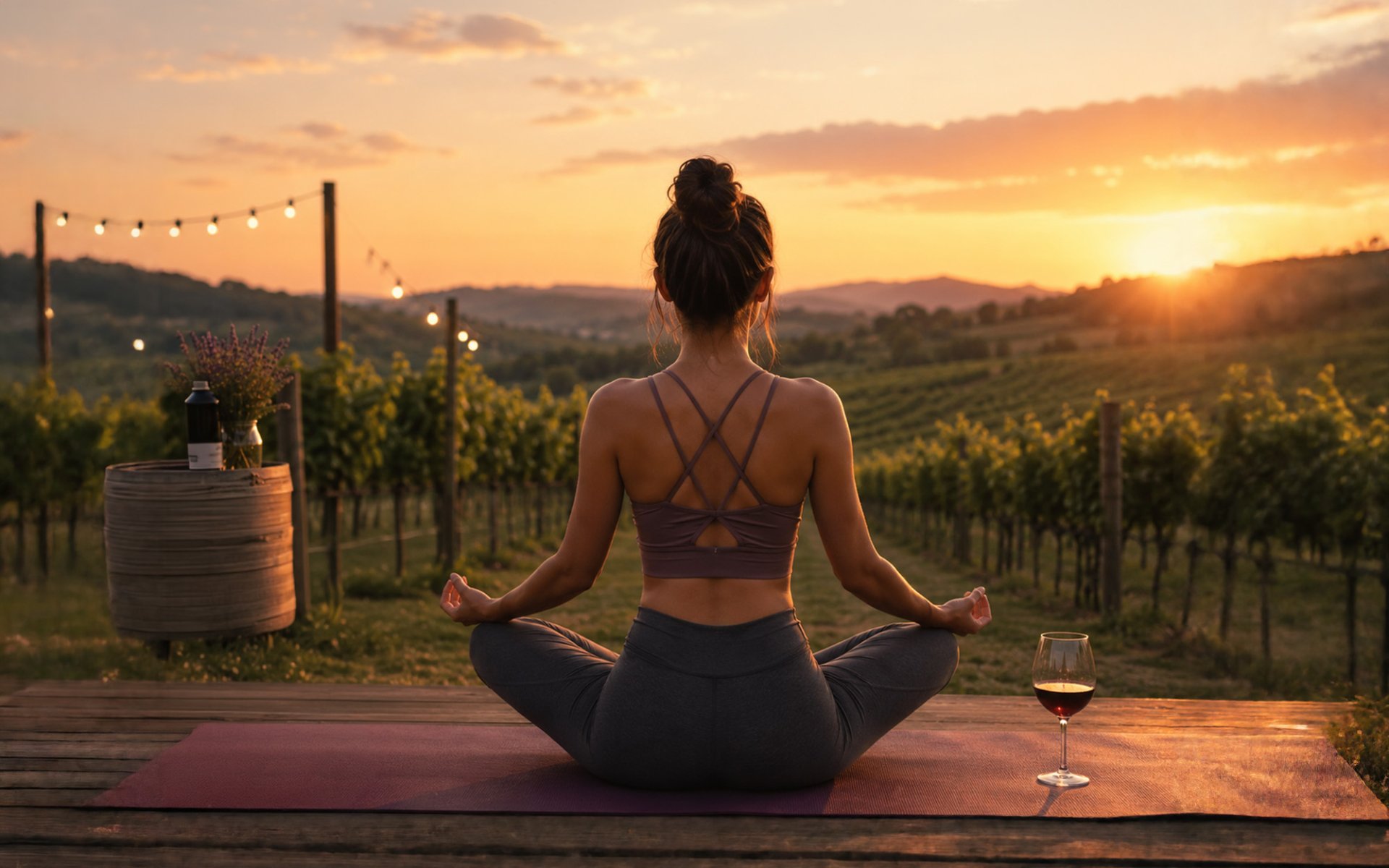
In recent years, the global wellness movement has continued to gain momentum as people place greater emphasis on physical health, mental well-being, and achieving a balanced lifestyle. As a result, a variety of innovative wellness activities have emerged, one of the most notable being Wine Yoga.
Wine Yoga originated in the United States, where yoga enthusiasts sought to create a new wellness experience by blending mindful movement with wine culture. The concept quickly attracted attention from individuals looking for wellness activities that felt accessible, enjoyable, and less formal than conventional yoga classes. From there, the trend gradually spread to Europe, Australia, and many other parts of the world.
Although these styles differ in their approaches, they share a common objective: making yoga more accessible and approachable while challenging the perception that yoga is exclusively for highly flexible individuals or those seeking a strict and disciplined practice.
The date is also linked to an important legend in yogic history. According to tradition, it was during this period that Lord Shiva, regarded as the first yogi or Adiyogi, began transmitting the knowledge of yoga to his seven disciples, known as the Saptarishis. This event is considered the starting point for the dissemination of yogic wisdom to humanity and forms the foundation of yoga's philosophy of nurturing the body, mind, and spirit.
The first International Day of Yoga was celebrated in 2015. Since then, the event has grown into a global phenomenon, attracting millions of participants across more than 190 countries worldwide.
This year marks the 12th International Day of Yoga, celebrated under the theme “Yoga for Wellness, Wisdom, and World Peace.” The theme reflects a growing understanding that yoga is not merely a form of physical exercise but an essential component of overall well-being.
Although yoga has roots that stretch back thousands of years, its adaptability has allowed it to evolve alongside contemporary lifestyles. Whether practiced in its traditional form or through modern interpretations such as Wine Yoga, the essence of yoga remains unchanged: cultivating mindfulness, self-awareness, and balance in everyday life.
As the world celebrates the International Day of Yoga each year on June 21, it serves as a meaningful reminder to prioritize both physical and mental well-being. Whether through yoga, other forms of exercise, nutritious food, or moments of rest and reflection, true wellness is ultimately achieved through balance in all aspects of life.
The Concept and Origins of Wine Yoga
Wine Yoga is a practice that combines the ancient discipline of yoga from India with the mindful enjoyment of wine. Participants engage in yoga sessions within a relaxed and welcoming atmosphere, often followed by a wine tasting experience. In some formats, small amounts of wine may be enjoyed during the session itself, creating a unique experience that differs from traditional yoga practice.Wine Yoga originated in the United States, where yoga enthusiasts sought to create a new wellness experience by blending mindful movement with wine culture. The concept quickly attracted attention from individuals looking for wellness activities that felt accessible, enjoyable, and less formal than conventional yoga classes. From there, the trend gradually spread to Europe, Australia, and many other parts of the world.
The Rise of Wine Yoga in Europe's Wine Regions
In Europe, particularly in France, which is widely recognized as one of the world's most influential wine-producing countries, Wine Yoga has gained increasing popularity. Renowned wine regions such as Bordeaux and Champagne have developed tourism programs and experiential activities that creatively combine yoga practice with the lifestyle and traditions of wine culture.The Evolution of Modern Yoga Practices
Over the years, the world of yoga has evolved into many different forms. Beyond Wine Yoga, numerous modern styles have gained popularity, including Bikram Yoga, practiced in heated rooms; Aerial Yoga, which utilizes suspended fabric hammocks; and SUP Yoga (Stand-Up Paddleboard Yoga), which combines yoga postures with balance training on water. Other innovative variations include Doga, which incorporates dogs into yoga sessions, and Goat Yoga, where participants practice alongside friendly goats.Although these styles differ in their approaches, they share a common objective: making yoga more accessible and approachable while challenging the perception that yoga is exclusively for highly flexible individuals or those seeking a strict and disciplined practice.
International Day of Yoga
The International Day of Yoga was officially proclaimed by the United Nations General Assembly on December 11, 2014, following a proposal by Indian Prime Minister Narendra Modi. The resolution received support from 175 member states, making it one of the most widely supported resolutions in the history of the United Nations General Assembly. This overwhelming endorsement reflected global recognition of yoga as a valuable cultural heritage and a powerful practice for promoting health and well-being.The Significance of the Summer Solstice
The date of June 21 was not chosen by coincidence. It holds significance both astronomically and culturally. June 21 marks the Summer Solstice, the longest day of the year in the Northern Hemisphere. In ancient Indian traditions, this period is regarded as a time of transformation and the beginning of a new cycle of energy.The date is also linked to an important legend in yogic history. According to tradition, it was during this period that Lord Shiva, regarded as the first yogi or Adiyogi, began transmitting the knowledge of yoga to his seven disciples, known as the Saptarishis. This event is considered the starting point for the dissemination of yogic wisdom to humanity and forms the foundation of yoga's philosophy of nurturing the body, mind, and spirit.
The first International Day of Yoga was celebrated in 2015. Since then, the event has grown into a global phenomenon, attracting millions of participants across more than 190 countries worldwide.
This year marks the 12th International Day of Yoga, celebrated under the theme “Yoga for Wellness, Wisdom, and World Peace.” The theme reflects a growing understanding that yoga is not merely a form of physical exercise but an essential component of overall well-being.
Yoga, Wellness, and Modern Living
Over the past decade, the concept of wellness has expanded far beyond exercise and nutrition alone. Increasingly, people are embracing a holistic approach to health that encompasses physical fitness, mental well-being, emotional balance, and overall quality of life. Activities such as Wine Yoga exemplify this shift by highlighting the importance of finding harmony between self-care and enjoyment.Although yoga has roots that stretch back thousands of years, its adaptability has allowed it to evolve alongside contemporary lifestyles. Whether practiced in its traditional form or through modern interpretations such as Wine Yoga, the essence of yoga remains unchanged: cultivating mindfulness, self-awareness, and balance in everyday life.
As the world celebrates the International Day of Yoga each year on June 21, it serves as a meaningful reminder to prioritize both physical and mental well-being. Whether through yoga, other forms of exercise, nutritious food, or moments of rest and reflection, true wellness is ultimately achieved through balance in all aspects of life.
Tags :
Related Content

Nicolas Appert: The French Innovator Known as The Father of Canning


Gut-Friendly Food: An In-Depth Look at Foods That Support Gut Health — The Core of Immunity and Holistic Well-Being