Salade Lyonnaise
Last updated: 8 Jul 2026
France has long been celebrated as one of the world's great culinary destinations, renowned for its rich gastronomic heritage, meticulous cooking techniques, and exceptional regional ingredients. While Paris is often the first city that comes to mind when discussing French cuisine, the city most widely recognized as the "gastronomic capital of the world" is Lyon, located in southeastern France.
This abundance of exceptional local produce gave rise to a distinctive culinary tradition centered on seasonal ingredients, simple yet refined preparation, and a profound respect for the natural flavors of every component. Equally important was the philosophy of minimizing waste by making full use of every part of each ingredient—an approach that remains at the heart of Lyonnais cuisine today.
As Lyon flourished as the silk-weaving capital of France, bouchons became popular gathering places for the city's Canuts, the silk workers who required affordable, nourishing meals after long hours of labor. These establishments served robust dishes prepared from locally sourced ingredients, including pork, offal, sausages, freshwater fish, seasonal vegetables, and bread, emphasizing practicality, flavor, and respect for every ingredient.
Combining refined culinary techniques with traditional regional recipes, they transformed humble local dishes into elegant cuisine without sacrificing authenticity. Among the most influential were Mère Fillioux, regarded as one of the pioneers of Lyonnais gastronomy, and her student Eugénie Brazier, who made history as the first female chef to earn three Michelin stars simultaneously for two separate restaurants. Their achievements profoundly influenced later generations of chefs, including Paul Bocuse, often hailed as the father of modern French cuisine, who carried forward their philosophy of respecting ingredients and highlighting natural flavors.
It is worth noting, however, that this designation is not an official recognition by UNESCO. Within UNESCO's Creative Cities Network, the French city recognized for gastronomy is Dijon, which joined the network in 2021. Lyon's reputation instead stems from centuries of culinary excellence, influential chefs, distinguished food traditions, and the enduring admiration of gastronomic experts worldwide.
Its enduring popularity lies in the harmonious combination of simple ingredients and refined culinary technique. The iconic presentation—a perfectly poached egg resting atop a bed of curly frisée—has also contributed to the salad's distinctive identity and timeless appeal.
During the twentieth century, as French cuisine gained international prominence through culinary schools, celebrated chefs, and the global expansion of French restaurants, Salade Lyonnaise traveled alongside many other classic French dishes and became familiar to food lovers around the world.
Today, the salad appears on menus across Europe, North America, Asia, and beyond. While local adaptations may substitute Frisée Fine with other leafy greens or replace traditional French lardons with pancetta or locally cured bacon, the essential composition remains unchanged: slightly bitter greens, tangy vinaigrette, smoky pork, crunchy croutons, and a delicately poached egg.
Beyond restaurant menus, Salade Lyonnaise is also widely taught in culinary schools throughout France and internationally. It serves as an excellent demonstration of one of the fundamental principles of French cooking: exceptional dishes are created not through complexity, but through quality ingredients, careful technique, and the perfect balance of flavors and textures. More than a century after its creation, Salade Lyonnaise continues to represent the timeless elegance and culinary philosophy of Lyon on the global stage.
Lyon : The Heart of French Gastronomy
Situated at the confluence of the Rhône and Saône rivers, Lyon has served as an important commercial and transportation hub since Roman times. This strategic location allowed premium ingredients from surrounding regions to flow naturally into the city, including seasonal fruits and vegetables from Drôme and Ardèche, world-famous poultry from Bresse, freshwater fish from the lakes and rivers of Savoie, and distinguished wines from Beaujolais and the Rhône Valley.This abundance of exceptional local produce gave rise to a distinctive culinary tradition centered on seasonal ingredients, simple yet refined preparation, and a profound respect for the natural flavors of every component. Equally important was the philosophy of minimizing waste by making full use of every part of each ingredient—an approach that remains at the heart of Lyonnais cuisine today.
The Essence of Salade Lyonnaise
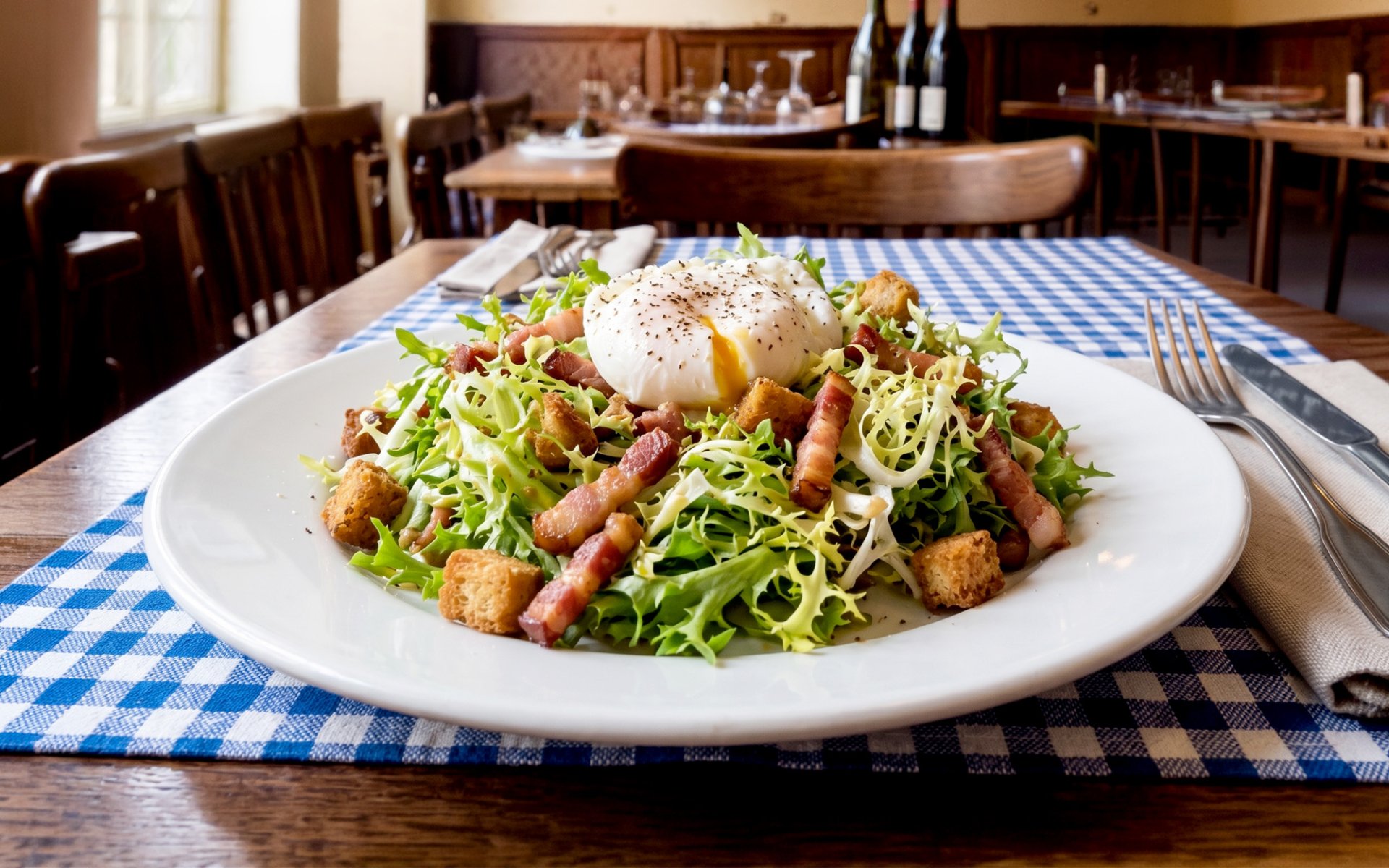
Among the city's many traditional dishes, Salade Lyonnaise stands out as one of the finest expressions of Lyon's culinary identity and heritage. Although composed of only a handful of humble ingredients, the salad delivers remarkable depth, richness, and balance. The essential components include :- Frisée Fine: Delicate, slightly bitter curly greens.
- Crisp Bacon Lardons: Smoky, savory pork.
- Crunchy Croutons: Adding the perfect textural contrast.
- Poached Egg: A delicately cooked egg resting atop the greens.
- Tangy Vinaigrette: A dressing that ties all the flavors together.
The Tradition of the Lyonnais Bouchon
The bouchon is one of Lyon's most cherished culinary institutions. Although the exact origin of the word remains debated, one theory suggests it comes from the bundles of straw or twigs once hung outside taverns during the 16th century to signal that food and wine were available. Another links the term to straw brushes used to groom travelers' horses. Regardless of its etymology, the word has become synonymous with small, welcoming restaurants serving hearty regional cuisine.As Lyon flourished as the silk-weaving capital of France, bouchons became popular gathering places for the city's Canuts, the silk workers who required affordable, nourishing meals after long hours of labor. These establishments served robust dishes prepared from locally sourced ingredients, including pork, offal, sausages, freshwater fish, seasonal vegetables, and bread, emphasizing practicality, flavor, and respect for every ingredient.
The Women Who Shaped Lyon's Culinary Legacy
Lyon's culinary reputation reached new heights during the late nineteenth and early twentieth centuries through the remarkable work of the Mères Lyonnaises ("The Mothers of Lyon"). Many of these talented women had previously served as private cooks for affluent households before opening their own restaurants as social and economic conditions changed.Combining refined culinary techniques with traditional regional recipes, they transformed humble local dishes into elegant cuisine without sacrificing authenticity. Among the most influential were Mère Fillioux, regarded as one of the pioneers of Lyonnais gastronomy, and her student Eugénie Brazier, who made history as the first female chef to earn three Michelin stars simultaneously for two separate restaurants. Their achievements profoundly influenced later generations of chefs, including Paul Bocuse, often hailed as the father of modern French cuisine, who carried forward their philosophy of respecting ingredients and highlighting natural flavors.
Why Lyon Is Known as the Gastronomic Capital of the World
In 1935, renowned French food critic Curnonsky, famously known as the Prince of Gastronomy, declared Lyon the "World Capital of Gastronomy." The title quickly gained widespread recognition and has remained closely associated with the city ever since.It is worth noting, however, that this designation is not an official recognition by UNESCO. Within UNESCO's Creative Cities Network, the French city recognized for gastronomy is Dijon, which joined the network in 2021. Lyon's reputation instead stems from centuries of culinary excellence, influential chefs, distinguished food traditions, and the enduring admiration of gastronomic experts worldwide.
From Local Specialty to International Classic
Originally served in modest neighborhood bouchons, Salade Lyonnaise gradually spread throughout France, eventually becoming a staple of bistros and French restaurants nationwide—from Paris to cities across the country.Its enduring popularity lies in the harmonious combination of simple ingredients and refined culinary technique. The iconic presentation—a perfectly poached egg resting atop a bed of curly frisée—has also contributed to the salad's distinctive identity and timeless appeal.
During the twentieth century, as French cuisine gained international prominence through culinary schools, celebrated chefs, and the global expansion of French restaurants, Salade Lyonnaise traveled alongside many other classic French dishes and became familiar to food lovers around the world.
Today, the salad appears on menus across Europe, North America, Asia, and beyond. While local adaptations may substitute Frisée Fine with other leafy greens or replace traditional French lardons with pancetta or locally cured bacon, the essential composition remains unchanged: slightly bitter greens, tangy vinaigrette, smoky pork, crunchy croutons, and a delicately poached egg.
Beyond restaurant menus, Salade Lyonnaise is also widely taught in culinary schools throughout France and internationally. It serves as an excellent demonstration of one of the fundamental principles of French cooking: exceptional dishes are created not through complexity, but through quality ingredients, careful technique, and the perfect balance of flavors and textures. More than a century after its creation, Salade Lyonnaise continues to represent the timeless elegance and culinary philosophy of Lyon on the global stage.
Tags :
Related Content