Cougar Gold
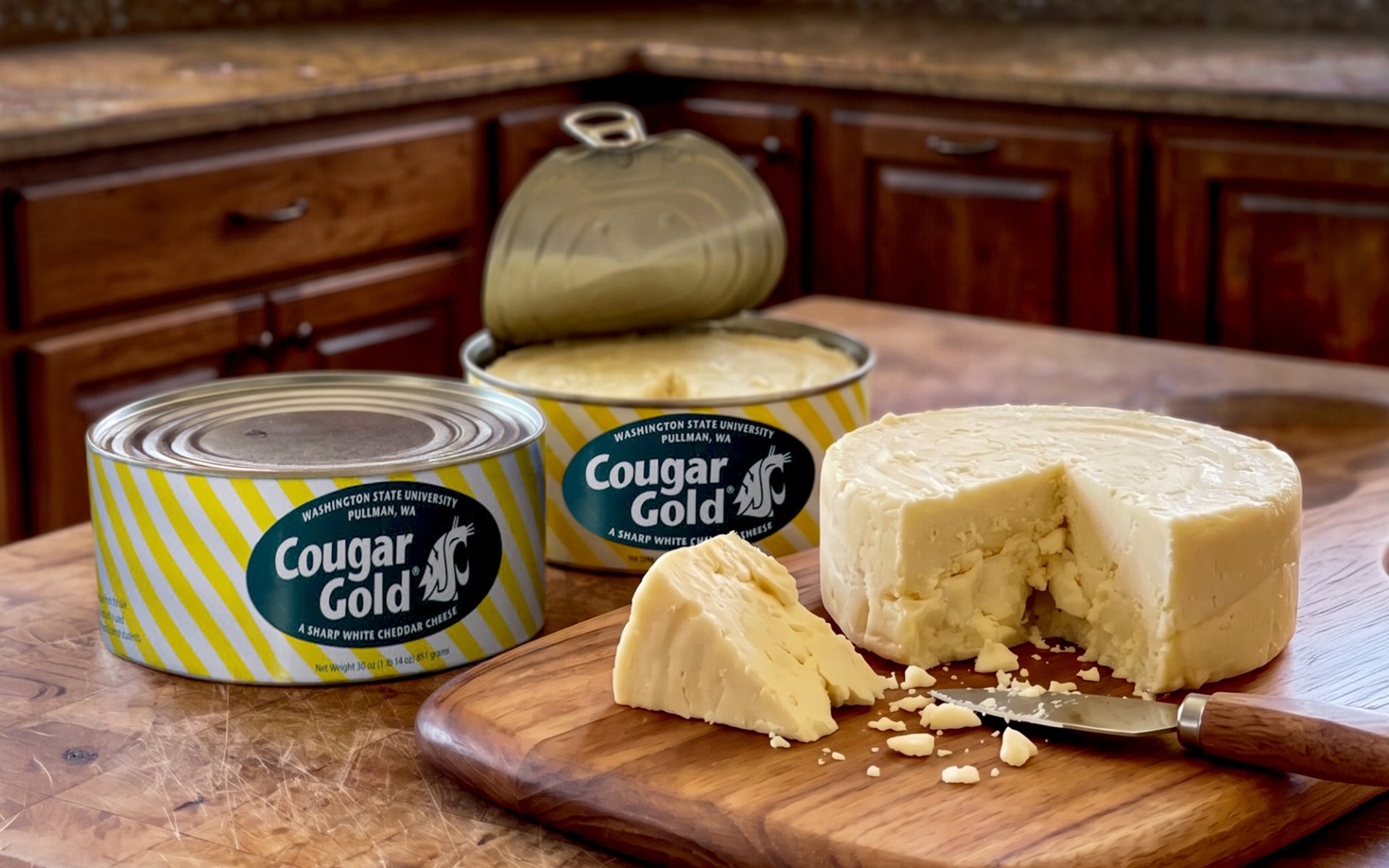
These challenges eventually led to the development of “Cougar Gold,” a white cheddar cheese packaged in vacuum-sealed metal cans, which became one of the most significant innovations in the history of food technology in the United States.
The Pioneer Behind the Innovation
The story of Cougar Gold began with Professor Norman S. Golding, a British scholar and expert in dairy science and cheesemaking. He joined the faculty of the Department of Animal Sciences and Dairy Science in October 1934 after gaining extensive experience in the dairy industry, research, and education at several institutions.From an early age, Professor Norman was exposed to dairy production through his work in milk-processing facilities. He later served during the First World War before earning both his master’s degree and doctorate from Iowa State College (now known as Iowa State University). He then moved to Washington State, where he played a significant role in developing dairy science education programs and conducting cheese production research.
In the early 1940s, while conducting practical instruction at the university’s dairy plant, Professor Norman experimented with cheese production by incorporating microorganisms traditionally used in yogurt fermentation into the conventional cheddar-making process. The result was a cheese with a richer flavor, smoother texture, and a distinctive character that differed from ordinary cheddar. This experiment became the foundation of a cheese formula that was later further developed into what would become known as Cougar Gold.
The Canning Innovation & The Legendary "WSU19" Culture
At that time, the United States government placed significant emphasis on food preservation research to strengthen national food security and support military supplies during wartime. Most cheeses were aged and sold as blocks coated with wax. Although wax coatings helped prevent moisture loss, any cracks during transportation could allow mold and microorganisms to enter the cheese, shortening its shelf life.
With support from government agencies and the American Can Company, a research team at Washington State College, led by Professor Norman, began exploring the possibility of packaging cheese in vacuum-sealed metal cans. The goal was to protect the product from air, moisture, and contamination.
However, developing canned cheese was far from simple. The microorganisms used in cheesemaking convert lactose into lactic acid while producing carbon dioxide. If cheese were sealed inside an airtight container, the gas accumulation could cause the can to swell and become damaged.
To overcome this challenge, Professor Norman and his research team developed a specialized cheese culture capable of effectively controlling gas production :
The WSU19 Culture : This innovation not only allowed the cheese to safely mature inside the sealed can but also created the unique characteristics of Cougar Gold—its firm yet delicately crumbly texture, nutty aroma, rich milky sweetness, and subtle acidity.
Although developed during a period of wartime research, accounts suggest that the primary objective was to solve the problem of mold growth and extend shelf life, rather than directly producing military rations. Furthermore, while canning provided effective protection, Cougar Gold still required proper temperature-controlled storage (refrigeration) to maintain its quality.
The Origin of the Name and Packaging Evolution
The name “Cougar Gold” reflects a combination of elements representing both the university’s identity and the pioneer behind its development :- Cougar: The official animal symbol and mascot of Washington State University.
- Gold: Chosen in honor of Professor Norman S. Golding.
The Magic of Aging : Flavor Profile and Decades-Long Shelf Life
Cougar Gold is a white cheddar cheese aged for a minimum of 12 months before being released for sale.- Flavor & Texture : It features a richer and more complex flavor profile compared with ordinary cheddar, characterized by a nutty aroma, a rich milky sweetness reminiscent of Swiss cheese or Gouda, and a subtle tanginess created by the distinctive WSU19 culture. The cheese has a firm yet smooth texture that gradually develops a more crumbly, flaky consistency as it ages.
- Long-Term Aging : When stored under appropriate conditions (in refrigeration), unopened cans can remain in good condition for several decades. Throughout storage, the cheese continues to mature slowly inside the can, resulting in a deeper flavor and a drier, more crumbly texture.
- Vintage Appeal : There are documented cases of consumers opening Cougar Gold cans stored for more than 20–30 years, discovering that the cheese remained safe to eat and possessed a richer, more developed flavor. Many collectors purchase it specifically to age for special occasions.
Global Recognition and Student Pride
With its exceptional quality, Cougar Gold has earned widespread recognition, including the Blue Ribbon Award from the American Cheese Society (1993), a Silver Medal at the United States Championship Cheese Contest (1995), a Silver Medal at the World Cheese Awards (2000), and a Gold Medal at the same competition in 2006. It has also been featured by leading food media outlets like Bon Appétit magazine and The Rachael Ray Show.Today, Washington State University produces approximately 250,000–260,000 cans of Cougar Cheese products annually, with over 80 percent being Cougar Gold. Despite this growth, the manufacturing process continues to serve as a hands-on learning environment for students.
Students in dairy science participate in every stage of production—from receiving raw milk to filling the cans and distributing products through Ferdinand’s Ice Cream Shoppe. A unique tradition is that each batch of cheese cans carries the name or initials of the students responsible for production on the label. This practice represents accountability and pride, reflecting the idea that every can of Cougar Gold is the result of education, practical experience, and the continuation of knowledge.
From a small university research project more than eight decades ago, Cougar Gold has evolved into one of the most important symbols of Washington State University. Due to high demand—especially during the year-end holiday season—the creamery occasionally introduces purchase limits per customer, making it one of the most distinctive and treasured cheddar cheeses in the United States.