The Secrets of Sherry Wine
Last updated: 5 Oct 2026
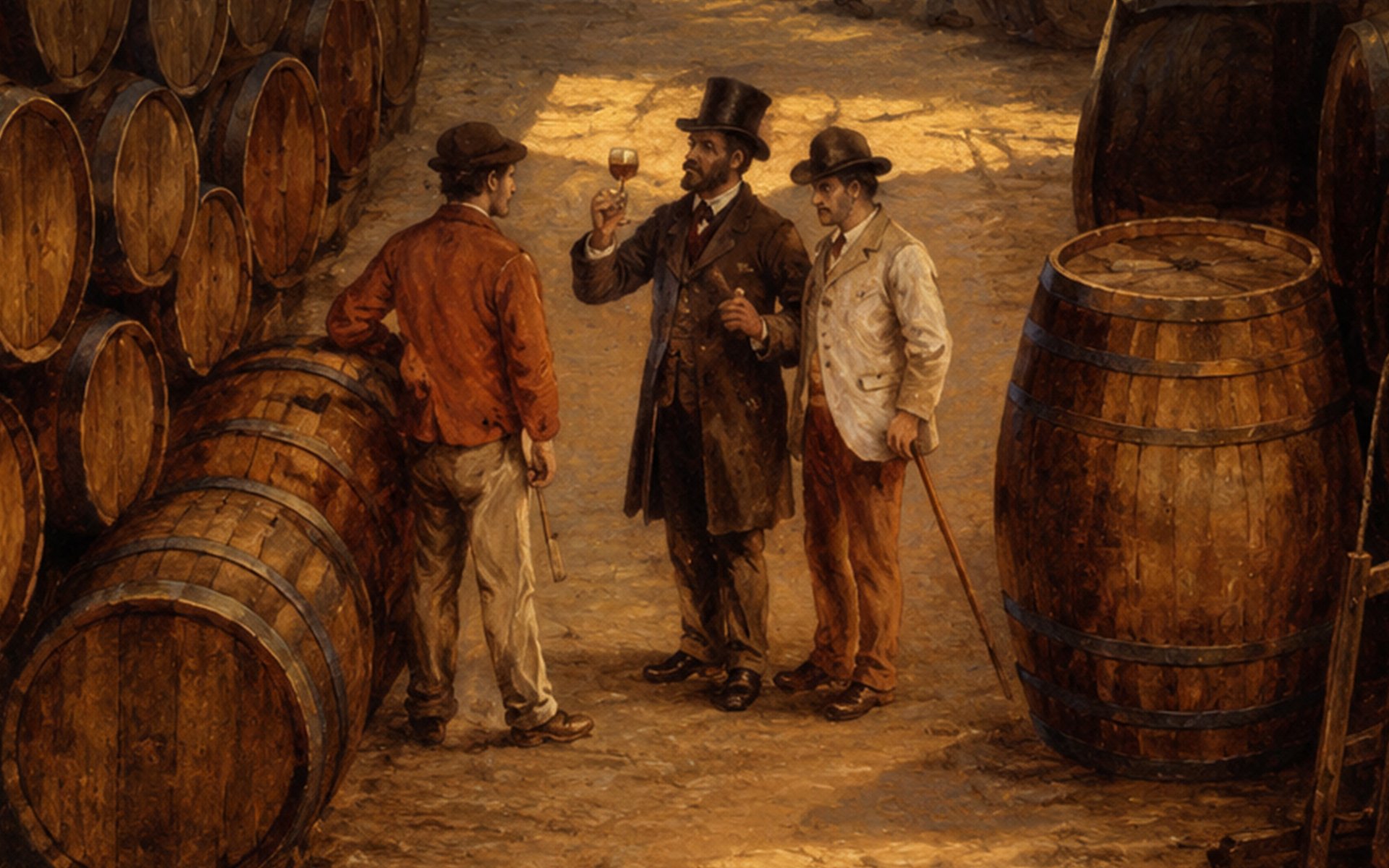
Sherry is a fortified wine, distinguished from conventional wines by its unique production process. It undergoes aging in wooden casks, where climate, grape varieties, yeast, maturation, and time work together to create its distinctive character.
Sherry is produced in a designated area of Andalusia, in southern Spain, known as the “Sherry Triangle.” This area comprises three important towns: Jerez de la Frontera, El Puerto de Santa María, and Sanlúcar de Barrameda.
The name “Sherry” is the English pronunciation of “Jerez,” the name of the region’s central city and a place that has played a significant role in wine production for centuries.
The region has a winemaking history spanning more than 3,000 years, along with a climate and landscape particularly well suited to growing grapes for Sherry. Three principal varieties are used: Palomino, Pedro Ximénez, and Moscatel. Each has its own characteristics and contributes differently to the personality of the wine.
The vineyards of the Jerez region cover more than 7,000 hectares, and are characterized by a distinctive soil known as Albariza. This bright, white soil is rich in calcium and minerals. One of its most important qualities is its ability to absorb and retain rainwater in the soil, gradually releasing moisture to the vines during the region’s hot and dry summers.
Although Sherry is based on just three principal grape varieties, they can be used to create remarkably diverse styles, ranging from delicate, dry wines to intensely sweet expressions filled with aromas of ripe and dried fruit.
As a result, Sherry made from Palomino can develop into a wide range of styles, from Fino, with its fresh, dry character and delicate almond-like aromas, to Oloroso, which offers greater richness and structure, accompanied by aromas of nuts, spices, and wood developed through aging.
PX Sherry is rich and viscous, with pronounced sweetness and aromas of raisins, dried fruit, and syrup. Its distinctive character makes it particularly suitable for pairing with desserts, as well as salty and intensely flavored dishes, where its sweetness can create a pleasing contrast and balance.
Moscatel is prized for its naturally expressive aromas, often showing floral notes alongside ripe and dried fruit. Sherry made from Moscatel therefore tends to have a fragrant, sweet character with a more pronounced fruit profile.
Compared with Pedro Ximénez, Moscatel generally feels more aromatic and lively, with a stronger floral character. This difference allows the two varieties to create distinctly different expressions of sweet Sherry.
Once Flor develops, the yeast works at the surface of the wine, transforming certain components through a biological process and influencing the wine’s aromas, flavors, and texture. This is known as Biological Ageing.
Aging under Flor allows the wine to retain its freshness and dryness while developing distinctive characteristics such as almond, bread, and yeast-like aromas. It also contributes to a lighter, more delicate texture.
This process is fundamental to the production of Fino and Manzanilla, which are fresh, dry, and delicate styles of Sherry. They differ from Sherry aged with greater exposure to oxygen, a process known as Oxidative Ageing, which produces wines with deeper color, greater weight, and a different layer of complexity.
In the Solera system, casks are arranged in several levels or tiers. The lowest level is called the Solera, containing older wine that is ready for bottling. The levels above it are known as Criaderas, containing younger wines that are still developing.
When a portion of wine is removed from the Solera for bottling, wine from the Criadera immediately above is transferred downward to replace it. Wine from the higher levels is then moved down in sequence, maintaining the balance of wine within each level. This process is repeated continuously over many years.
What makes the system particularly fascinating is that it does not focus on identifying wine by a single vintage year. Instead, it prioritizes maintaining the wine’s character, flavor profile, and consistency through the blending of wines from different generations.
As a result, a Solera system that is still in operation today may contain wines from many different periods of time. This is why the concept of “age” in Sherry differs from that of conventional vintage wines.
The principle is similar to Champagne in France: the name refers not simply to a style or type of wine, but also to its geographical origin, landscape, and production methods. Together, these elements form the identity that distinguishes Sherry from other fortified wines around the world.
Manzanilla and Fino are excellent with seafood, appetizers, olives, almonds, and salty dishes. Their dry character and freshness enhance the flavors of the food while refreshing the palate, preventing the overall combination from becoming too heavy.
Amontillado offers greater structure and complexity, making it well suited to richer dishes such as pork, smoked salmon, soups, and slow-cooked dishes.
Oloroso, with its rich character and pronounced aromas developed through aging, pairs particularly well with red meat, roasted meats, and slow-cooked dishes served with rich sauces.
Palo Cortado offers considerable complexity in both aroma and structure, making it suitable for more intensely flavored and intricate dishes, including game meat—meat from wild animals hunted in nature rather than conventionally farmed livestock—aged cheeses, and richly flavored main courses.
Sherry is also an intriguing choice for Asian cuisine, particularly Fino, Manzanilla, and Amontillado, which can work remarkably well with dishes that are spicy, salty, sour, or boldly seasoned. Their dryness and freshness help cleanse and refresh the palate, while the complexity of the wine adds another dimension to dishes featuring spices and layers of flavor.
Sherry is produced in a designated area of Andalusia, in southern Spain, known as the “Sherry Triangle.” This area comprises three important towns: Jerez de la Frontera, El Puerto de Santa María, and Sanlúcar de Barrameda.
The name “Sherry” is the English pronunciation of “Jerez,” the name of the region’s central city and a place that has played a significant role in wine production for centuries.
The region has a winemaking history spanning more than 3,000 years, along with a climate and landscape particularly well suited to growing grapes for Sherry. Three principal varieties are used: Palomino, Pedro Ximénez, and Moscatel. Each has its own characteristics and contributes differently to the personality of the wine.
The vineyards of the Jerez region cover more than 7,000 hectares, and are characterized by a distinctive soil known as Albariza. This bright, white soil is rich in calcium and minerals. One of its most important qualities is its ability to absorb and retain rainwater in the soil, gradually releasing moisture to the vines during the region’s hot and dry summers.
Although Sherry is based on just three principal grape varieties, they can be used to create remarkably diverse styles, ranging from delicate, dry wines to intensely sweet expressions filled with aromas of ripe and dried fruit.
Palomino: The Foundation of Dry Sherry
Palomino is the principal grape variety used to produce dry styles of Sherry, particularly Fino, Manzanilla, Amontillado, and Oloroso. The variety is relatively neutral in character, without the pronounced sweetness or intense fruit aromas found in some other grapes. This apparent neutrality, however, is one of its greatest strengths, allowing the aging process, yeast, and oxygen to play a greater role in shaping the wine’s aromas, flavors, and structure.As a result, Sherry made from Palomino can develop into a wide range of styles, from Fino, with its fresh, dry character and delicate almond-like aromas, to Oloroso, which offers greater richness and structure, accompanied by aromas of nuts, spices, and wood developed through aging.
Pedro Ximénez: Richness and Sweetness
Pedro Ximénez, often abbreviated as PX, is an important grape for producing sweet Sherry. After harvest, the grapes are traditionally dried under the sun in a process known as Soleo, allowing water to evaporate and concentrating their natural sugars. The grapes take on a raisin-like appearance before being pressed and made into wine.PX Sherry is rich and viscous, with pronounced sweetness and aromas of raisins, dried fruit, and syrup. Its distinctive character makes it particularly suitable for pairing with desserts, as well as salty and intensely flavored dishes, where its sweetness can create a pleasing contrast and balance.
Moscatel: Floral and Aromatic
Moscatel is another grape variety used to produce sweet Sherry, particularly around Chipiona and the coastal areas of the Jerez region, where the conditions are well suited to the variety.Moscatel is prized for its naturally expressive aromas, often showing floral notes alongside ripe and dried fruit. Sherry made from Moscatel therefore tends to have a fragrant, sweet character with a more pronounced fruit profile.
Compared with Pedro Ximénez, Moscatel generally feels more aromatic and lively, with a stronger floral character. This difference allows the two varieties to create distinctly different expressions of sweet Sherry.
Flor: The Living Layer of Yeast
Another essential element that sets Sherry apart from many other wines is Flor, a layer of yeast that naturally forms on the surface of the wine inside the cask. Far from being an unwanted element, this yeast is an integral part of the production process and plays a crucial role in shaping the character of wines from the Jerez region.Once Flor develops, the yeast works at the surface of the wine, transforming certain components through a biological process and influencing the wine’s aromas, flavors, and texture. This is known as Biological Ageing.
Aging under Flor allows the wine to retain its freshness and dryness while developing distinctive characteristics such as almond, bread, and yeast-like aromas. It also contributes to a lighter, more delicate texture.
This process is fundamental to the production of Fino and Manzanilla, which are fresh, dry, and delicate styles of Sherry. They differ from Sherry aged with greater exposure to oxygen, a process known as Oxidative Ageing, which produces wines with deeper color, greater weight, and a different layer of complexity.
Criaderas y Solera: The Art of Continuous Aging
Another important secret behind Sherry is the Criaderas y Solera system, a distinctive method of aging and blending wine. It differs from the conventional approach, in which wines are generally separated by vintage and aged in their original barrels until bottling.In the Solera system, casks are arranged in several levels or tiers. The lowest level is called the Solera, containing older wine that is ready for bottling. The levels above it are known as Criaderas, containing younger wines that are still developing.
When a portion of wine is removed from the Solera for bottling, wine from the Criadera immediately above is transferred downward to replace it. Wine from the higher levels is then moved down in sequence, maintaining the balance of wine within each level. This process is repeated continuously over many years.
What makes the system particularly fascinating is that it does not focus on identifying wine by a single vintage year. Instead, it prioritizes maintaining the wine’s character, flavor profile, and consistency through the blending of wines from different generations.
As a result, a Solera system that is still in operation today may contain wines from many different periods of time. This is why the concept of “age” in Sherry differs from that of conventional vintage wines.
Jerez-Xérès-Sherry: A Protected Origin
Today, Sherry is protected as a wine-producing region with a controlled designation of origin, or Denominación de Origen (DO), under the name “Jerez-Xérès-Sherry.” The designation establishes clear boundaries and production standards. Legally, wine using the name “Sherry” must be produced and aged within the designated area.The principle is similar to Champagne in France: the name refers not simply to a style or type of wine, but also to its geographical origin, landscape, and production methods. Together, these elements form the identity that distinguishes Sherry from other fortified wines around the world.
Sherry and Food Pairing
Sherry is one of the most versatile wines when it comes to food pairing. Its wide range of styles allows it to complement everything from appetizers and seafood to main courses and desserts.Manzanilla and Fino are excellent with seafood, appetizers, olives, almonds, and salty dishes. Their dry character and freshness enhance the flavors of the food while refreshing the palate, preventing the overall combination from becoming too heavy.
Amontillado offers greater structure and complexity, making it well suited to richer dishes such as pork, smoked salmon, soups, and slow-cooked dishes.
Oloroso, with its rich character and pronounced aromas developed through aging, pairs particularly well with red meat, roasted meats, and slow-cooked dishes served with rich sauces.
Palo Cortado offers considerable complexity in both aroma and structure, making it suitable for more intensely flavored and intricate dishes, including game meat—meat from wild animals hunted in nature rather than conventionally farmed livestock—aged cheeses, and richly flavored main courses.
Sherry is also an intriguing choice for Asian cuisine, particularly Fino, Manzanilla, and Amontillado, which can work remarkably well with dishes that are spicy, salty, sour, or boldly seasoned. Their dryness and freshness help cleanse and refresh the palate, while the complexity of the wine adds another dimension to dishes featuring spices and layers of flavor.
Tags :
Related Content

Get to Know “San Miguel” – A Philippine Beer Brand Recognized as One of the Oldest in Southeast Asia

Decoding Wine Labels : Understanding "Old World Wines" and "New World Wines"