Hot Cross Buns
Last updated: 24 Mar 2026
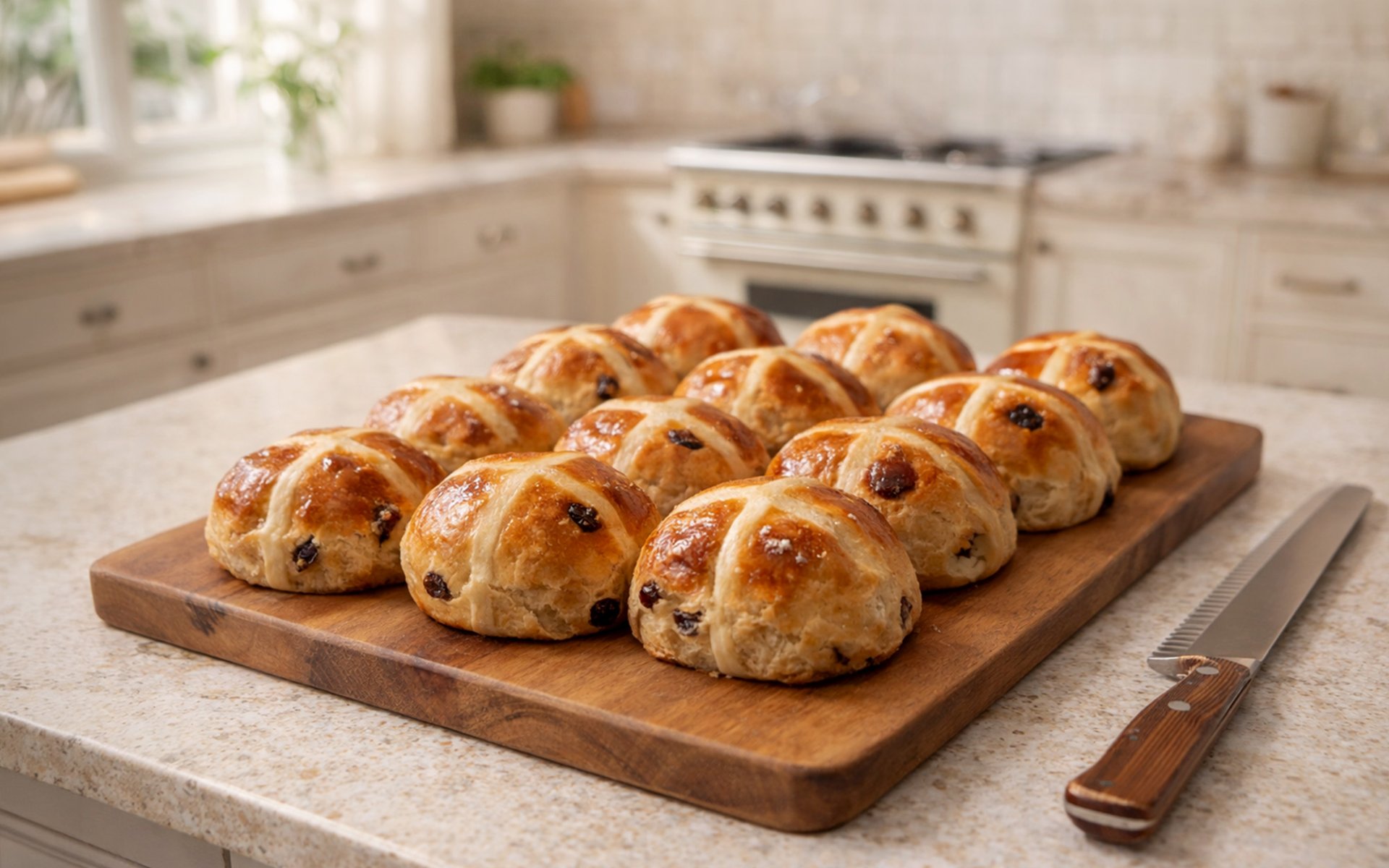
Every year, as Easter approaches, soft, spiced buns marked with a cross on top—known as “Hot Cross Buns”—begin to appear in bakeries and supermarkets around the world. They are especially popular in countries such as the United Kingdom, Australia, New Zealand, Canada, Ireland, and other Commonwealth nations.
Pre-Christian Origins of Hot Cross Buns
Hot Cross Buns have a long history that dates back to a time before Christianity. According to legend, these buns were first created by the Saxons in ancient England, who worshipped Eostre, the goddess of spring and fertility.Symbolism of the Cross in Pagan Times
During that time, the Saxons baked round buns flavored with spices and herbs, marking a cross on top as an offering to the goddess Eostre. However, the cross symbol initially had no connection to Christianity—it represented the four phases of the moon, which were closely tied to nature, seasonal cycles, and agricultural fertility.Transformation Through Christianity
As Christianity spread throughout Europe between the 1st and 4th centuries, many traditional beliefs and rituals were adapted to align with Christian teachings. This included the spiced buns marked with a cross.Religious Meaning in Good Friday Tradition
In the Christian context, the cross became a symbol of the crucifixion of Jesus Christ. As a result, Hot Cross Buns came to be associated with Good Friday—the day commemorating the crucifixion of Jesus—before His resurrection on the following Sunday.Significance of Easter Celebration
That Sunday is celebrated as Easter, one of the most important days in Christianity, symbolizing the triumph of life over death, as well as hope and renewal.Historical Regulation in Elizabethan England
One of the most fascinating periods in the history of Hot Cross Buns occurred during the reign of Queen Elizabeth I of England in the late 16th century.Superstitions and Legal Restrictions
At that time, strong superstitions surrounding these buns led the government to fear their misuse and the spread of irrational beliefs. As a result, a law was introduced restricting the sale of Hot Cross Buns, allowing them to be sold only during funerals, Christmas, and Good Friday.Impact of Regulations on Cultural Significance
Anyone who baked these buns outside the permitted occasions was required to distribute them to the poor. Ironically, this strict regulation reinforced their status as a “special treat,” making them even more strongly associated with the Easter season.
Folklore and Beliefs Surrounding Hot Cross Buns
Over the centuries, Hot Cross Buns have also become part of European folklore, accompanied by a variety of fascinating beliefs, such as:- Keeping Hot Cross Buns throughout the year is believed to ward off evil and illness
- Sharing them with others is thought to strengthen friendships and relationships
- Eating them on Good Friday is believed to bring good luck and good health
- Buns baked on Good Friday are said to last all year without molding (which may be scientifically explained by their high sugar and spice content acting as preservatives)
- Hanging a Hot Cross Bun in the kitchen is believed to prevent fires and protect against evil spirits
- For the sick, crumbs of the bun mixed with water were believed to have healing properties
Global Expansion and Recipe Adaptations
As the British Empire expanded across the globe, Hot Cross Buns spread to regions such as Australia, New Zealand, Canada, and South Africa. Each country has adapted the recipe to suit local ingredients and tastes—adding chocolate or caramel, using a variety of dried fruits, or adjusting sweetness levels to match consumer preferences.Despite these variations, the iconic “cross on top” remains the defining feature of Hot Cross Buns, preserving their identity across cultures and generations.
Tags :
Related Content

Discover Romanesco Cauliflower: The Striking Fractal Vegetable Celebrated as One of the World's Most Beautiful

Tracing the History of Korean Fried Chicken Culture to a Global Culinary Phenomenon
Christmas isn't complete without Panettone: Tracing the Sweet History of the Classic Festive Bread