Why is Rosé considered Europe's "Summer Wine"?
Last updated: 7 Apr 2026
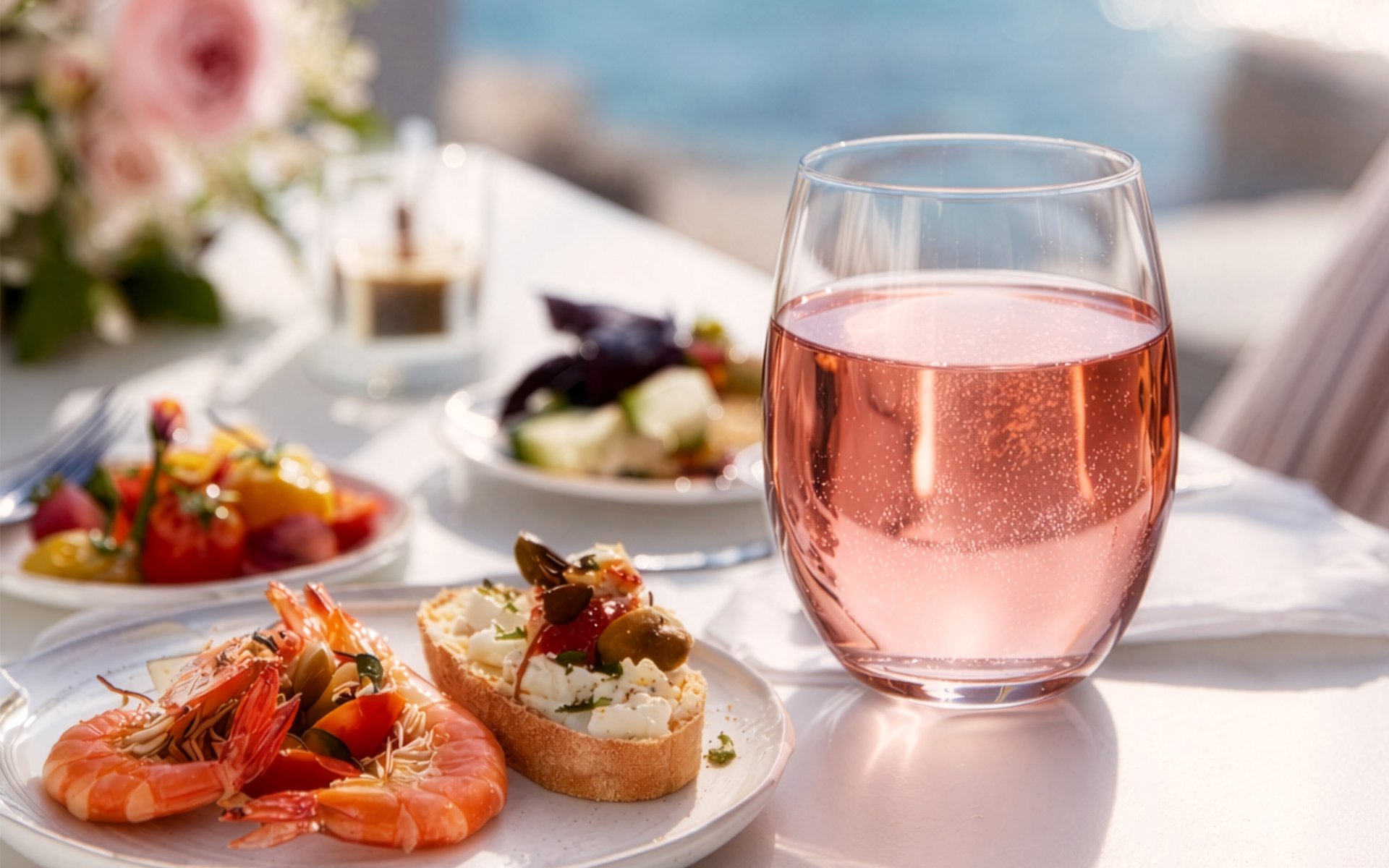
Rosé wine is a type of wine that ranges in color from very pale pink to deep pink. This color comes from the skins of red grapes, but it differs from red wine in its production process, particularly in a step called “maceration.” This is the process of soaking grape skins in grape juice to extract color and tannins, which contribute to the wine’s astringency. For Rosé, the skins are left in contact with the juice for only a few hours before being removed, after which fermentation continues. Beyond affecting the color, this process also results in lower tannin levels, giving Rosé its refreshing taste, low astringency, berry-like aromas, and light acidity, making it suitable for pairing with a wide variety of foods.
Around 4,000 BCE, wine first originated in the region that is now known as Georgia. In ancient winemaking, there were no techniques to extract deep color, resulting in wines that were lighter in color, closer to Rosé than to modern red wines, which require longer fermentation processes that only developed during the Greek and Roman periods. Therefore, it can be said that Rosé originates from the earliest forms of wine in the world.
Although the production of deeply colored red wine has been continuously refined over time, the making of light pink wine has never disappeared from winemaking culture. In many regions, pink wine existed as a by-product of red wine production during periods when red wine quality was still inconsistent. The first Rosé to gain recognition across Europe during the Middle Ages was “Clairet” from the Bordeaux region of France. Although it is remembered today as a red wine, it was originally a deep pink to purplish wine and is classified as a dark Rosé. Additionally, the famous sparkling wine Champagne was originally pale pink, made from red Pinot Noir grapes, and remained in shades of pink through the Middle Ages before evolving into white wine in the 17th century.
With the historical introduction of grape cultivation from Greece to France in the 6th century, particularly in the area that is now the city of Marseille—the center of the Provence region—French winemaking culture grew stronger over time. France eventually became the largest producer of Rosé in the world, with Provence serving as its cultural center. Located along the Mediterranean coast in the south of the country, Rosé wines from Provence are traditionally enjoyed with seafood typical of the Mediterranean region. Furthermore, in 1999, the “Centre de Recherche et d'Expérimentation sur le Vin Rosé” was established as the only research center in the world dedicated specifically to Rosé, focusing on studying the impact of climate on its production.
Entering the 20th century, luxury yet accessible seaside tourism in France began to flourish. Rosé was rediscovered as a summer beverage from Provence around the 1930s. Beyond its coastal origins, the taste and characteristics of Rosé also make it particularly suitable for warm weather. With its slightly acidic taste, light body, and moderate alcohol content (11–13%), Rosé is refreshing to drink. It is also best served chilled at 8–12°C, which further enhances its refreshing quality, allowing Rosé to quickly become a popular summer drink. Moreover, Rosé is the only type of wine culture that allows the addition of ice for extra refreshment, commonly referred to as “swimming pool rosé.”
Rosé from Provence, as a symbol of summer, was further discovered by the global audience during the 1950s–1960s, when the Cannes Film Festival began attracting Hollywood celebrities and international media to the French Riviera. Visitors brought this refreshing pink alcoholic beverage back to places such as New York and popular vacation destinations like California. Today, Rosé can be found not only along the coasts of Europe and America but also in various modern interpretations suited for summer. These include White Zinfandel, a sweeter style of Rosé from the United States that has been reinterpreted into a category known as “Blush,” as well as Frosé, which is made by freezing Rosé and blending it with other ingredients such as spirits, syrup, and fruits.
Around 4,000 BCE, wine first originated in the region that is now known as Georgia. In ancient winemaking, there were no techniques to extract deep color, resulting in wines that were lighter in color, closer to Rosé than to modern red wines, which require longer fermentation processes that only developed during the Greek and Roman periods. Therefore, it can be said that Rosé originates from the earliest forms of wine in the world.
Although the production of deeply colored red wine has been continuously refined over time, the making of light pink wine has never disappeared from winemaking culture. In many regions, pink wine existed as a by-product of red wine production during periods when red wine quality was still inconsistent. The first Rosé to gain recognition across Europe during the Middle Ages was “Clairet” from the Bordeaux region of France. Although it is remembered today as a red wine, it was originally a deep pink to purplish wine and is classified as a dark Rosé. Additionally, the famous sparkling wine Champagne was originally pale pink, made from red Pinot Noir grapes, and remained in shades of pink through the Middle Ages before evolving into white wine in the 17th century.
With the historical introduction of grape cultivation from Greece to France in the 6th century, particularly in the area that is now the city of Marseille—the center of the Provence region—French winemaking culture grew stronger over time. France eventually became the largest producer of Rosé in the world, with Provence serving as its cultural center. Located along the Mediterranean coast in the south of the country, Rosé wines from Provence are traditionally enjoyed with seafood typical of the Mediterranean region. Furthermore, in 1999, the “Centre de Recherche et d'Expérimentation sur le Vin Rosé” was established as the only research center in the world dedicated specifically to Rosé, focusing on studying the impact of climate on its production.
Entering the 20th century, luxury yet accessible seaside tourism in France began to flourish. Rosé was rediscovered as a summer beverage from Provence around the 1930s. Beyond its coastal origins, the taste and characteristics of Rosé also make it particularly suitable for warm weather. With its slightly acidic taste, light body, and moderate alcohol content (11–13%), Rosé is refreshing to drink. It is also best served chilled at 8–12°C, which further enhances its refreshing quality, allowing Rosé to quickly become a popular summer drink. Moreover, Rosé is the only type of wine culture that allows the addition of ice for extra refreshment, commonly referred to as “swimming pool rosé.”
Rosé from Provence, as a symbol of summer, was further discovered by the global audience during the 1950s–1960s, when the Cannes Film Festival began attracting Hollywood celebrities and international media to the French Riviera. Visitors brought this refreshing pink alcoholic beverage back to places such as New York and popular vacation destinations like California. Today, Rosé can be found not only along the coasts of Europe and America but also in various modern interpretations suited for summer. These include White Zinfandel, a sweeter style of Rosé from the United States that has been reinterpreted into a category known as “Blush,” as well as Frosé, which is made by freezing Rosé and blending it with other ingredients such as spirits, syrup, and fruits.
Tags :
Related Content

Discovering Duvel Tripel Hop: A Unique Belgian Strong Pale Ale from Duvel Moortgat Brewery in Belgium