Salmon Terrine
Last updated: 8 Apr 2026
When it comes to dishes that reflect the elegance, precision, and sophistication of French culinary culture, “Salmon Terrine” is often among the first to be mentioned. This dish combines traditional European food preservation techniques—refined over centuries—with salmon, often regarded as the “king of fish,” resulting in a luxurious creation once served at aristocratic banquets.
The word “Terrine” originates from French, historically referring to a rectangular earthenware vessel used for cooking and preserving food, particularly minced or processed meats.
As culinary techniques evolved, the term “Terrine” came to describe the dish itself—typically made by combining ground meat with spices, herbs, and fat, then slowly cooking it, often by baking.
Terrine was originally a preservation method in an era before refrigeration, helping extend shelf life while also enhancing the richness of flavor. Historically, the term was also closely related to “Pâté,” though the two differ in preparation methods.
According to Larousse Gastronomique, one of the world’s most authoritative French culinary encyclopedias, dishes encased in pastry are called “Pâté en croûte,” while those cooked in a container without pastry are referred to as “Pâté en terrine,” commonly shortened to “Terrine.”
The introduction of salmon marked a significant turning point, as it created a lighter, more delicate version of the dish, making it particularly suitable as an appetizer—unlike traditional terrines, which were often rich and heavy.
French royal chefs applied the “farce” technique (a finely ground filling) to salmon, refining its texture into a smooth, mousse-like consistency by passing it through fine sieves, replacing the coarser textures of earlier preparations.
Preparing Salmon Terrine during this period was also a symbol of luxury and refinement, as it required precise temperature control. One key technique was bain-marie (water bath cooking), where the terrine mold is placed in hot water to ensure gentle and even heat distribution. This method helps preserve moisture and prevents overcooking, which could dry out or toughen the fish.
Premium ingredients such as truffles or cognac were often added to enhance depth and complexity of flavor.
During the same period, Auguste Escoffier, widely regarded as the father of modern cuisine, played a crucial role in organizing and standardizing French culinary practices. In his renowned work Le Guide Culinaire, he emphasized the importance of ingredient purity and quality in dishes such as Salmon Terrine.
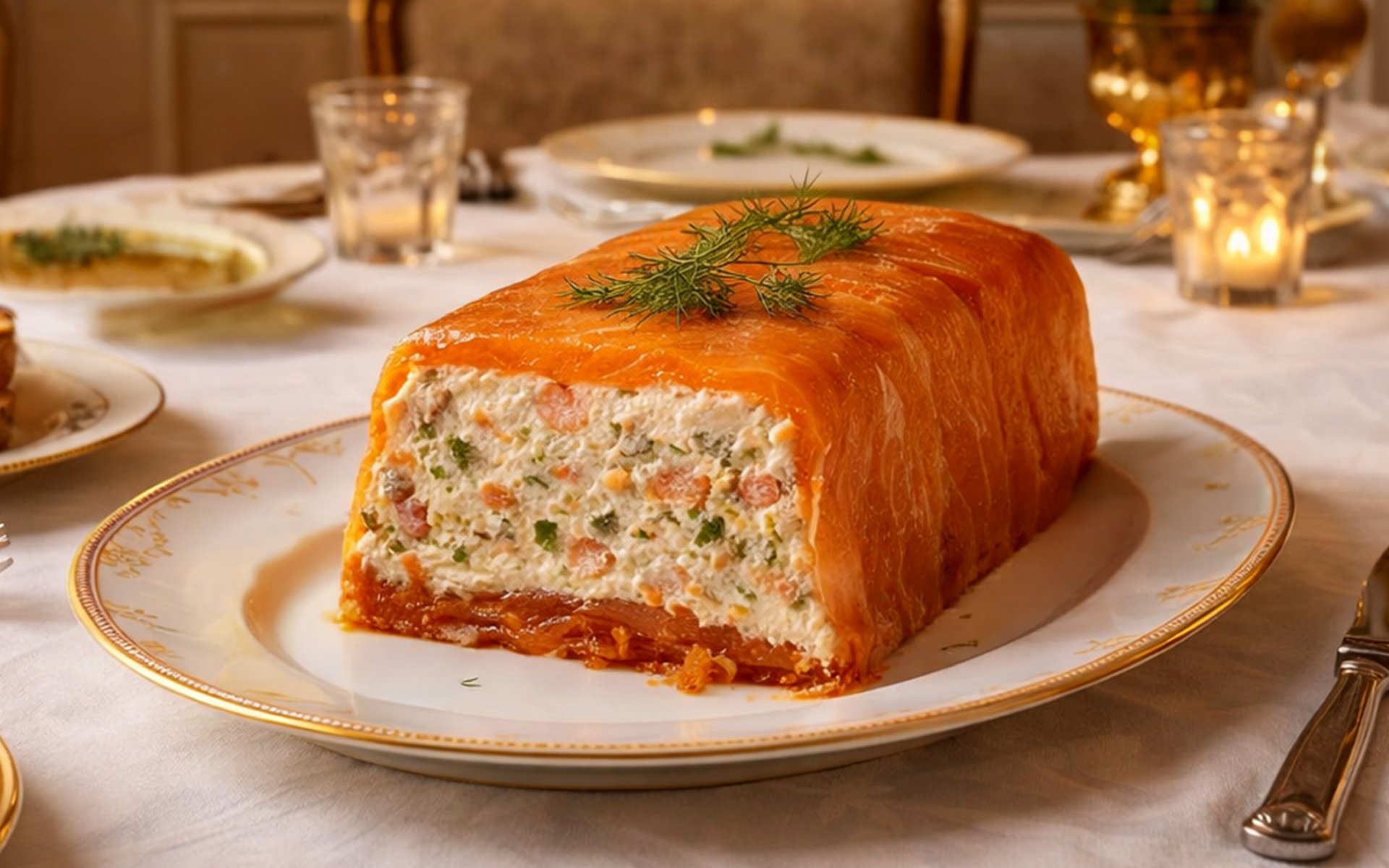
Presentation also became more refined during this time. Chefs began layering fresh salmon (with its natural pink-orange hue) alongside smoked salmon, often incorporating green vegetables such as spinach or asparagus. When sliced, the terrine would reveal visually striking patterns.
Salmon Terrine is typically served cold, a characteristic of certain French dishes, and is often accompanied by sauces such as dill sauce, lemon cream sauce, or mayonnaise, which enhance its flavor complexity.
By the 20th century, as French cuisine spread globally, Salmon Terrine became a popular feature in fine dining restaurants and luxury hotels. Its elegant appearance and ability to be prepared in advance make it ideal for banquets, buffets, and special occasions.
In countries such as the United States and Japan, chefs have adapted Salmon Terrine to suit local tastes by incorporating new spices or regional ingredients.
Recipes are also being adapted to suit health-conscious lifestyles—for example, by reducing fat content, using plant-based cream instead of dairy, and incorporating more vegetables and herbs.
Despite these modern adaptations, the essence of Salmon Terrine remains unchanged: precision, balance of flavor, and elegant presentation.
The word “Terrine” originates from French, historically referring to a rectangular earthenware vessel used for cooking and preserving food, particularly minced or processed meats.
As culinary techniques evolved, the term “Terrine” came to describe the dish itself—typically made by combining ground meat with spices, herbs, and fat, then slowly cooking it, often by baking.
Terrine was originally a preservation method in an era before refrigeration, helping extend shelf life while also enhancing the richness of flavor. Historically, the term was also closely related to “Pâté,” though the two differ in preparation methods.
According to Larousse Gastronomique, one of the world’s most authoritative French culinary encyclopedias, dishes encased in pastry are called “Pâté en croûte,” while those cooked in a container without pastry are referred to as “Pâté en terrine,” commonly shortened to “Terrine.”
The Evolution of Salmon Terrine
During the 17th and 18th centuries—the golden age of French cuisine—Terrine continued to evolve, especially within royal courts where culinary artistry was highly valued. Chefs began experimenting with a wide range of ingredients, including poultry, pork, foie gras, and eventually salmon.The introduction of salmon marked a significant turning point, as it created a lighter, more delicate version of the dish, making it particularly suitable as an appetizer—unlike traditional terrines, which were often rich and heavy.
French royal chefs applied the “farce” technique (a finely ground filling) to salmon, refining its texture into a smooth, mousse-like consistency by passing it through fine sieves, replacing the coarser textures of earlier preparations.
Preparing Salmon Terrine during this period was also a symbol of luxury and refinement, as it required precise temperature control. One key technique was bain-marie (water bath cooking), where the terrine mold is placed in hot water to ensure gentle and even heat distribution. This method helps preserve moisture and prevents overcooking, which could dry out or toughen the fish.
Premium ingredients such as truffles or cognac were often added to enhance depth and complexity of flavor.
Salmon Terrine in the Modern Era
In the 19th century, Salmon Terrine became more accessible to the middle class as advancements in transportation and food preservation made salmon from Northern Europe—such as Scotland, Norway, and northern France—more widely available.During the same period, Auguste Escoffier, widely regarded as the father of modern cuisine, played a crucial role in organizing and standardizing French culinary practices. In his renowned work Le Guide Culinaire, he emphasized the importance of ingredient purity and quality in dishes such as Salmon Terrine.
Presentation also became more refined during this time. Chefs began layering fresh salmon (with its natural pink-orange hue) alongside smoked salmon, often incorporating green vegetables such as spinach or asparagus. When sliced, the terrine would reveal visually striking patterns.
Salmon Terrine is typically served cold, a characteristic of certain French dishes, and is often accompanied by sauces such as dill sauce, lemon cream sauce, or mayonnaise, which enhance its flavor complexity.
Salmon Terrine in Haute Cuisine
In the world of Haute Cuisine, Salmon Terrine is considered a dish that clearly demonstrates a chef’s skill. It requires precision at every stage—from selecting high-quality ingredients and controlling cooking temperatures to arranging components neatly and achieving a smooth, refined texture.By the 20th century, as French cuisine spread globally, Salmon Terrine became a popular feature in fine dining restaurants and luxury hotels. Its elegant appearance and ability to be prepared in advance make it ideal for banquets, buffets, and special occasions.
In countries such as the United States and Japan, chefs have adapted Salmon Terrine to suit local tastes by incorporating new spices or regional ingredients.
Salmon Terrine Today
In modern cuisine, Salmon Terrine continues to evolve. Contemporary chefs reinterpret the dish using advanced techniques such as sous-vide or molecular gastronomy, enhancing both its visual appeal and culinary sophistication.Recipes are also being adapted to suit health-conscious lifestyles—for example, by reducing fat content, using plant-based cream instead of dairy, and incorporating more vegetables and herbs.
Despite these modern adaptations, the essence of Salmon Terrine remains unchanged: precision, balance of flavor, and elegant presentation.
Tags :
Related Content