Australian Table Grapes
Last updated: 20 Apr 2026
Australian Table Grapes are high-quality grapes grown in Australia specifically for fresh consumption. They are renowned for their excellent quality, naturally sweet and juicy flavor, firm and crisp texture, and wide variety of cultivars. These grapes are produced under strict food safety and environmental standards.
Australia offers ideal climatic conditions for grape cultivation, combined with advanced agricultural technologies and well-structured industry management. As a result, Australian table grapes are known for their consistent quality and have gained strong recognition in global markets.
In the early stages, grape cultivation in Australia faced many challenges and limited success. However, the introduction of vine cuttings and seedlings during this period laid the foundation for the development of Australia’s grape industry.
By the early 20th century, however, demand for fresh table grapes began to grow both domestically and internationally. This shift encouraged growers to adapt their practices and focus more on producing grapes for fresh consumption to meet changing market demands.
Following World War I and II, the Australian government allocated land to returning soldiers, particularly in regions such as Sunraysia and Riverina. This led to rapid expansion of vineyards. These new-generation farmers adopted more refined cultivation techniques, careful vineyard management, and efficient production systems, significantly improving the quality of Australian table grapes.
Australia is recognized as one of the countries with the strictest food safety standards. All exported grapes undergo rigorous quality checks at every stage—from cultivation to packaging and transportation.
Key certifications include:
In Australia, consumer demand remains strong, with an average purchase of around 800 grams per person per purchase, reflecting the popularity of fresh grapes in everyday consumption.
You can find a wide variety of Australian Table Grapes at Rimping Supermarket.
Australia offers ideal climatic conditions for grape cultivation, combined with advanced agricultural technologies and well-structured industry management. As a result, Australian table grapes are known for their consistent quality and have gained strong recognition in global markets.
Origins and Early Development
Grapes were first introduced to Australia in the late 18th century, arriving with the First Fleet led by Captain Arthur Phillip in 1788. The vines were brought from Brazil and the Cape of Good Hope and were first planted at Farm Cove (Wuganmagulya) in present-day Sydney.In the early stages, grape cultivation in Australia faced many challenges and limited success. However, the introduction of vine cuttings and seedlings during this period laid the foundation for the development of Australia’s grape industry.
Expansion of the Industry
During the 19th century, grape cultivation expanded into various valleys and regions with diverse climates. At that time, most grapes were primarily used for wine production.By the early 20th century, however, demand for fresh table grapes began to grow both domestically and internationally. This shift encouraged growers to adapt their practices and focus more on producing grapes for fresh consumption to meet changing market demands.
Following World War I and II, the Australian government allocated land to returning soldiers, particularly in regions such as Sunraysia and Riverina. This led to rapid expansion of vineyards. These new-generation farmers adopted more refined cultivation techniques, careful vineyard management, and efficient production systems, significantly improving the quality of Australian table grapes.
Varieties of Australian Table Grapes
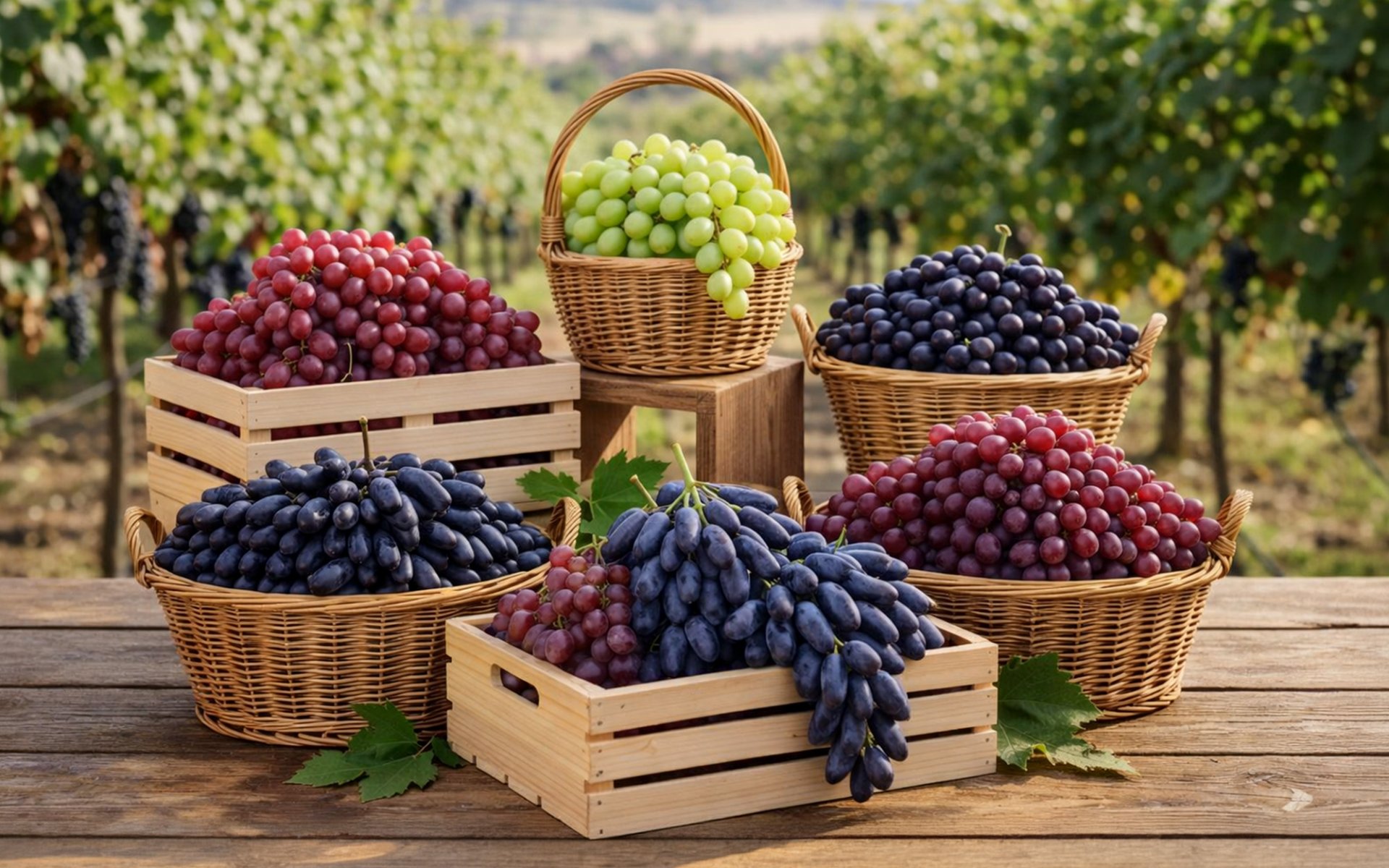
One of the key strengths of Australian table grapes is their wide variety, developed to meet global consumer preferences. These can be broadly categorized as follows:Green Grapes
Examples include Thompson Seedless (Sultana), Menindee Seedless, and Sweet Globe. These grapes are crisp, seedless, and offer a balanced sweet-tart flavor, making them highly popular in Asian markets.Red Grapes
Varieties such as Crimson Seedless, Flame Seedless, and Timco are known for their rich sweetness and vibrant color, making them ideal for both fresh consumption and food presentation.Black Grapes
Examples include Autumn Royal and Midnight Beauty. These grapes have a deep sweetness, distinctive aroma, and firm texture.Premium Varieties
In recent decades, Australia has developed innovative premium grape varieties, such as:- Cotton Candy Grapes – with a unique candy-like aroma
- Sweet Sapphire – elongated, finger-shaped grapes
- Allison and ARRA series – designed for premium markets
Production and Quality Control
Australian table grapes are hand-harvested to ensure only the best-quality fruit is selected. After harvesting, the grapes are packed and rapidly cooled at the vineyard, then transported in temperature-controlled conditions to maintain freshness throughout the supply chain.Australia is recognized as one of the countries with the strictest food safety standards. All exported grapes undergo rigorous quality checks at every stage—from cultivation to packaging and transportation.
Key certifications include:
- Freshcare – farm-level food safety certification
- GlobalG.A.P. – international standard for sustainable agriculture
- HACCP (Hazard Analysis and Critical Control Points) – food safety management system
Industry Support and Global Reach
A key organization supporting this industry is the Australian Table Grape Association (ATGA), which represents growers and exporters. Its main roles include:- Supporting research and development (R&D) in collaboration with institutions such as CSIRO and universities
- Promoting marketing and export activities in key markets like China, Japan, South Korea, and Southeast Asia
- Establishing industry standards to ensure product quality
- Providing training, knowledge, and market insights to growers
- Strengthening the global brand image of “Australian Grapes”
- Market Significance
In Australia, consumer demand remains strong, with an average purchase of around 800 grams per person per purchase, reflecting the popularity of fresh grapes in everyday consumption.
You can find a wide variety of Australian Table Grapes at Rimping Supermarket.
Tags :
Related Content