Frisée Fine
What is Frisée Fine?
Frisée Fine belongs to the chicory family and is botanically classified as Cichorium endivia var. crispum. It is closely related to endive and radicchio. Although many people mistake it for a type of lettuce, Frisée Fine actually belongs to an entirely different genus within the same botanical family. Internationally, it is most commonly marketed as Curly Endive.A Rich Culinary History
Chicory vegetables have been cultivated for thousands of years. Historical records suggest that both the ancient Egyptians and Greeks valued chicory not only as a food but also as a medicinal herb, believing it could promote healthy digestion. As cultivation spread throughout Europe—particularly in France—farmers carefully selected and refined superior varieties over generations, eventually producing the Frisée Fine we know today, prized for its exceptional flavor, texture, and appearance.Distinctive Flavor and Appearance
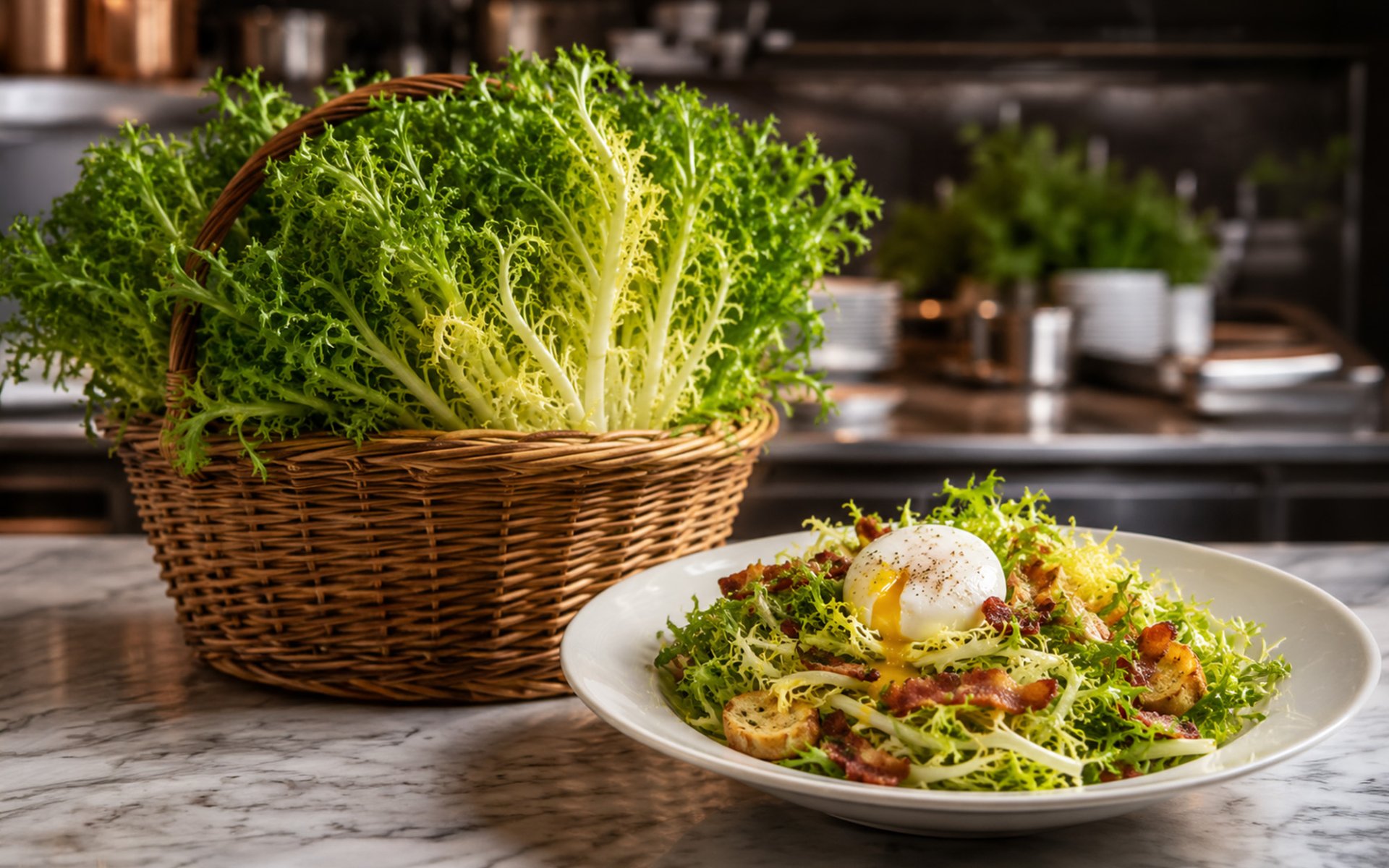
One of Frisée Fine's defining characteristics is its beautifully curled foliage. The finely divided leaves form a loose, feathery rosette resembling delicate lace. The outer leaves are deep green and naturally carry a pleasant, slightly bitter flavor, while the inner heart is pale yellow or creamy white, offering a milder taste and more tender texture. As a result, the inner leaves are especially prized for culinary use.The gentle bitterness that distinguishes Frisée Fine is one of its greatest culinary strengths. It adds complexity and balance when paired with rich or fatty ingredients such as crispy bacon, poached eggs, cheese, or tangy vinaigrette dressings made with vinegar and lemon juice. These contrasting flavors complement one another beautifully, making Frisée Fine one of the most beloved salad greens in both classic French cuisine and contemporary Western cooking.
Salade Lyonnaise : A French Bistro Classic
In France, Frisée Fine is the defining ingredient of the famous regional dish Salade Lyonnaise, a traditional salad from the city of Lyon. The dish combines Frisée Fine with crispy bacon lardons, a poached or soft-boiled egg, and a warm vinaigrette dressing. Widely regarded as one of the great classics of French bistro cuisine, Salade Lyonnaise has helped establish Frisée Fine as one of the world's most recognized premium salad greens.The Art of Blanching
From an agricultural perspective, Frisée Fine grows as a loose, open rosette. Its outer leaves are long, narrow, and deeply curled with finely serrated edges, while the inner leaves remain creamy white or pale yellow because they receive little direct sunlight.The light color of the inner leaves is not simply a natural occurrence but the result of a traditional cultivation technique known as blanching. Approximately two to four weeks before harvest, growers tie the outer leaves together or cover the plant with opaque containers, baskets, or other materials to block sunlight from reaching the center.
When deprived of light, the inner leaves produce less chlorophyll, resulting in their characteristic pale color. Blanching also reduces the concentration of bitter compounds, producing leaves that are more tender and delicately flavored, while the outer leaves retain their vibrant green color, crisp texture, and signature mild bitterness.
Nutritional Value and Health Benefits
Frisée Fine is a nutrient-dense vegetable with very few calories. A 100-gram serving contains only about 17 kilocalories, while being naturally low in fat and sugar, making it an excellent choice for individuals seeking to maintain a healthy diet or manage their weight.
- Vitamins and Minerals : It is rich in essential vitamins and minerals, including vitamins A, C, and K, folate, and dietary fiber. Vitamin A supports healthy vision and immune function, vitamin C acts as a powerful antioxidant while promoting collagen production, and vitamin K plays an important role in blood clotting and bone health. Frisée Fine also provides valuable minerals such as iron, potassium, copper, manganese, and zinc, all of which contribute to numerous physiological functions throughout the body.
- Gut and Heart Health : Another notable nutritional benefit of Frisée Fine is its content of inulin, a soluble dietary fiber that functions as a prebiotic. Inulin supports the growth of beneficial gut bacteria, helping maintain a healthy digestive system. Research also suggests that inulin may contribute to lowering levels of low-density lipoprotein (LDL) cholesterol and triglycerides, potentially supporting long-term cardiovascular health.
Culinary Uses and Fine Dining
Within Western cuisine, Frisée Fine is widely regarded as one of the finest premium salad greens favored by professional chefs. It is frequently paired with ingredients such as bacon, Pancetta, goat cheese, blue cheese, and extra virgin olive oil. Chefs also enjoy combining it with fresh fruits including apples, pears, and pomegranates, as well as proteins such as poached eggs, smoked duck breast, and seafood to create dishes with beautifully balanced flavors and textures.
Although Frisée Fine's gentle bitterness is characteristic of chicory vegetables, it can be softened through proper cooking techniques. Briefly blanching the leaves in boiling water followed by immediate immersion in ice water reduces bitterness while preserving their crisp texture. However, because heat may diminish certain nutrients—particularly vitamin C—fresh consumption remains the preferred method for maximizing its nutritional value.
With its elegant, feathery appearance and distinctive texture, Frisée Fine is also highly valued as a decorative element in Fine Dining presentations, adding visual height, sophistication, and refinement to beautifully plated dishes.