Barbera
Last updated: 10 Jul 2026
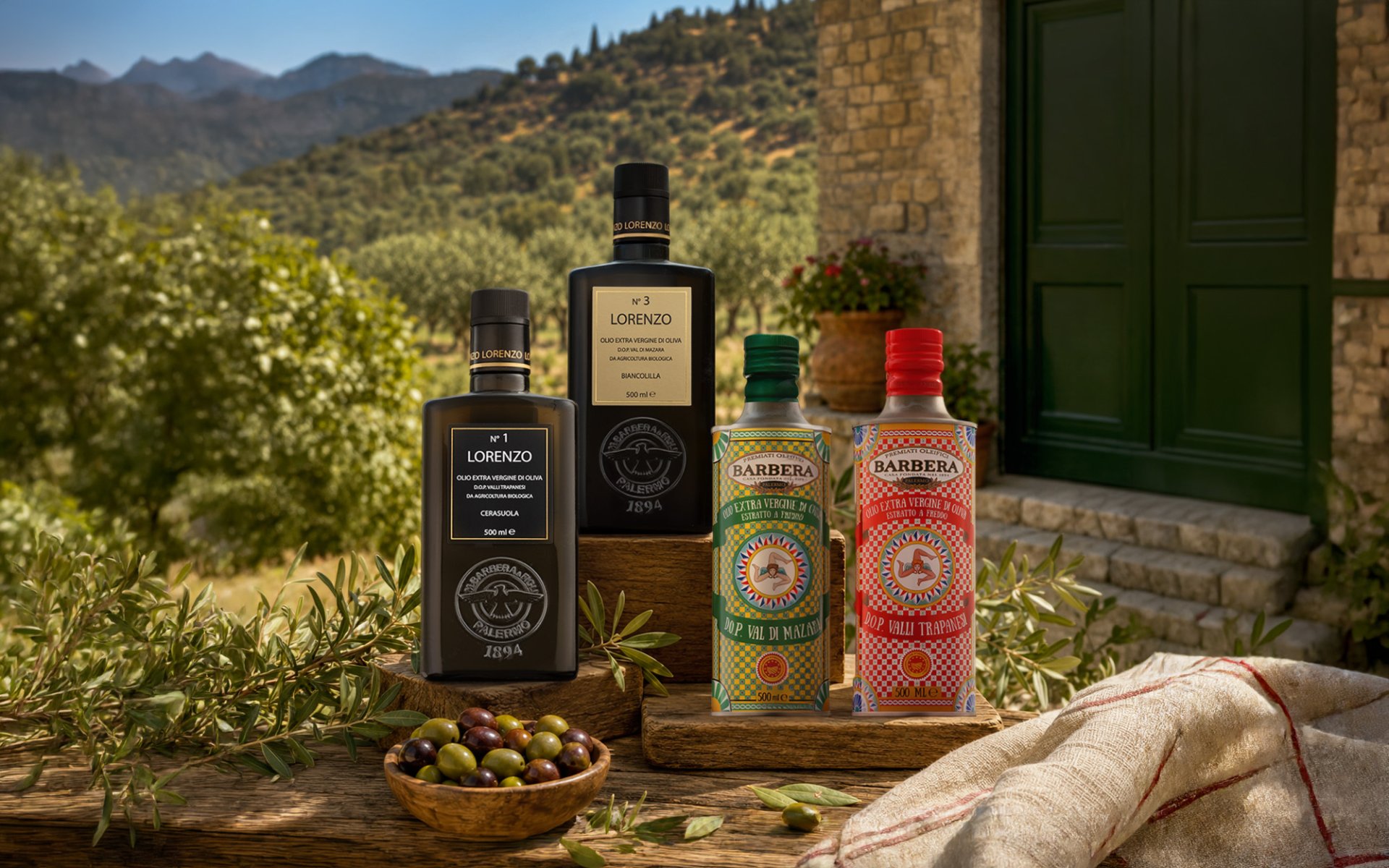
Olive oil is far more than an essential culinary ingredient. For thousands of years, it has been regarded as "liquid gold," sustaining the lives, culture, and civilization of the Mediterranean peoples. Since the eras of ancient Greece and Rome, olive oil has served not only as a staple in cooking but also as a valuable resource for healthcare, religious ceremonies, and international trade, ultimately becoming one of the defining symbols of the Mediterranean region.
Among the countless olive oil brands available worldwide, Barbera, officially known as Premiati Oleifici Barbera, stands out as one of the oldest and most respected olive oil producers. The company has earned international recognition through its unwavering commitment to exceptional quality while preserving generations of expertise, craftsmanship, and production philosophy passed down within the Barbera family.
At the time, the Barbera family was not yet involved in olive oil production. Instead, they operated agricultural businesses and traded citrus fruits, one of Sicily's most valuable agricultural products. Sicilian oranges and lemons were renowned for their outstanding quality and were exported throughout Europe. Through this business, the family accumulated extensive agricultural expertise, established strong commercial networks, and gained valuable insight into the premium food markets of the Mediterranean.
A pivotal moment came in 1894, when brothers Lorenzo Barbera and Vincenzo Barbera recognized the extraordinary potential of olive trees, which flourished in Sicily's fertile soil and favorable Mediterranean climate. Determined to produce exceptional olive oil, they devoted themselves to studying olive cultivation, selecting superior olive varieties, and refining olive oil extraction techniques, ultimately laying the foundation for a business dedicated to producing premium-quality olive oil.
Shortly thereafter, the Barbera family entered into a partnership with the Florio family, one of Sicily's most influential business dynasties. The Florio empire spanned numerous industries, including Marsala wine production, tuna fisheries, shipping, and international trade. This collaboration led to the establishment of Oleifici Siciliani.
One of Barbera's greatest achievements came at the Exposition Universelle in Paris in 1900, where its olive oils were awarded four Gold Medals. In 1904, the company received the Grand Prize at the Louisiana Purchase Exposition in St. Louis, Missouri, USA. Two years later, at the Esposizione Internazionale di Palermo, held in Palermo and Monreale, Barbera won both the Grand Prize and another Gold Medal. These prestigious awards significantly enhanced the company's international reputation and firmly established Barbera as one of Italy's leading olive oil producers from the very beginning of the twentieth century.
Beyond its commitment to quality, Barbera is also recognized as one of the pioneers of the modern olive oil industry. The company was among the first producers to commercially package Extra Virgin Olive Oil in glass bottles similar to those traditionally used for Marsala wine.
This innovation was remarkably advanced for its time. Previously, olive oil had typically been stored and transported in wooden barrels or large containers before being transferred into smaller vessels at its destination. Such practices often compromised the oil's consistency and quality, particularly during long-distance transportation.
By bottling olive oil directly in glass containers, Barbera greatly reduced the risk of contamination while preserving its aroma, flavor, and freshness. The new packaging also reassured consumers that they were purchasing olive oil directly from its source. Furthermore, this innovation enabled Sicilian olive oil to be shipped safely across the Mediterranean Sea and the Atlantic Ocean while maintaining its distinctive quality throughout the journey.
Nevertheless, the setback did not discourage the Barbera family. Lorenzo and Vincenzo Barbera remained committed to their vision and established a new company under the name Lorenzo e Vincenzo Barbera Oli, continuing to uphold the same uncompromising standards of quality that had defined their products from the beginning.
Around the same period, Manfredi Barbera, Lorenzo's son, joined the family business as its second-generation leader. Although the economic conditions of the time required the company to focus primarily on the domestic market and operate with great caution, these challenging years ultimately strengthened the family's resilience. The experience laid a solid foundation that would enable Barbera to endure and continue growing into one of Italy's most respected olive oil producers for generations to come. The company's independence and ability to rely on its own strengths became the cornerstone of the steady growth that would sustain future generations.
After joining the family business, Manfredi Barbera earned the nickname "The Colonel" because of his disciplined character, meticulous work ethic, and unwavering dedication—qualities that resembled those of a military officer. His exceptional attention to olive selection and uncompromising commitment to quality earned him widespread respect throughout the olive oil industry. In recognition of his expertise and leadership, he was later elected President of the International Olive Council (IOC), the intergovernmental organization responsible for promoting international cooperation, establishing quality standards, and supporting the global olive oil and table olive sectors.
The product was warmly received, particularly by consumers living in Italy's rapidly growing industrial cities, who longed to enjoy the fresh, traditional taste of olive oil despite living far from the olive-growing regions. The success of Olio Mosto reflected Barbera's ability to combine traditional craftsmanship with innovative thinking, creating products that met the evolving expectations of modern consumers while remaining faithful to Sicilian olive oil heritage.
Around the same period, the company officially adopted the name Manfredi Barbera & Figli S.p.A., highlighting the continuity of the family business across generations. At the same time, Lorenzo Barbera, affectionately known within the family as "Renzino" and often referred to as "Lorenzo, il poeta" ("Lorenzo the Poet"), joined the company as the third generation of family leadership.
The fourth generation was later led by Manfredi Barbera, widely known as "il mastro oleario" ("the master olive oil maker"). Under his leadership, the company entered a new era that successfully combined centuries-old tradition with modern innovation. From an early age, he accompanied his grandfather on visits to olive groves and olive mills throughout Sicily. These formative experiences gave him a profound understanding that exceptional olive oil begins with the land itself, the selection of the right olive cultivars, and production methods carefully tailored to each variety. This knowledge later became the foundation for developing new products and advancing modern production technologies.
One of his most significant achievements was the launch of Frantoia, the company's flagship product. Inspired by the Italian word frantoio, meaning "olive mill," the name reflects the deep connection between the people of Sicily, its fertile land, and its centuries-old olive-growing culture. Frantoia soon became the symbol of a new era for Barbera and marked the beginning of the company's serious expansion into international markets, particularly the United States, which has since become one of Barbera's most important export destinations.
The research mill was designed to evaluate five different olive crushing systems: disc crushing, hammer crushing, counter-rotating stone milling, pit removal before crushing, and a hybrid disc-and-hammer system. These technologies enable researchers to study how each crushing method influences the aroma, flavor profile, and chemical composition of the finished olive oil, providing valuable insights for continually improving production quality.
In addition, the company carefully designed its production facility so that olive receiving, sorting, washing, and crushing are physically separated from the oil extraction area. This layout minimizes the risk of contamination while maintaining the highest standards of hygiene throughout the production process. It reflects Barbera's long-standing commitment not only to superior quality and food safety but also to continuous research and technological innovation.
During this same period, the Barbera family officially welcomed its fifth generation of leadership, with Lorenzo and Carlo Barbera taking active roles in managing the company. Their names were later given to several of the company's premium product lines, symbolizing the continuation of the family's knowledge, values, and vision that have been carefully preserved and passed down for well over a century.
Among the countless olive oil brands available worldwide, Barbera, officially known as Premiati Oleifici Barbera, stands out as one of the oldest and most respected olive oil producers. The company has earned international recognition through its unwavering commitment to exceptional quality while preserving generations of expertise, craftsmanship, and production philosophy passed down within the Barbera family.
From a Hunting Lodge to an Olive Oil Legacy
The story of Barbera began in 1888, when the Barbera family, prosperous agricultural landowners from Menfi in the province of Agrigento, Sicily, relocated to San Lorenzo ai Colli, on the outskirts of Palermo. There, they acquired a seventeenth-century hunting lodge that had once belonged to the Prince of Buonfornello. This relocation reflected the lifestyle of Palermo's upper class during the late nineteenth century, when noble families commonly maintained country estates surrounded by olive groves and citrus orchards outside the city.At the time, the Barbera family was not yet involved in olive oil production. Instead, they operated agricultural businesses and traded citrus fruits, one of Sicily's most valuable agricultural products. Sicilian oranges and lemons were renowned for their outstanding quality and were exported throughout Europe. Through this business, the family accumulated extensive agricultural expertise, established strong commercial networks, and gained valuable insight into the premium food markets of the Mediterranean.
A pivotal moment came in 1894, when brothers Lorenzo Barbera and Vincenzo Barbera recognized the extraordinary potential of olive trees, which flourished in Sicily's fertile soil and favorable Mediterranean climate. Determined to produce exceptional olive oil, they devoted themselves to studying olive cultivation, selecting superior olive varieties, and refining olive oil extraction techniques, ultimately laying the foundation for a business dedicated to producing premium-quality olive oil.
Shortly thereafter, the Barbera family entered into a partnership with the Florio family, one of Sicily's most influential business dynasties. The Florio empire spanned numerous industries, including Marsala wine production, tuna fisheries, shipping, and international trade. This collaboration led to the establishment of Oleifici Siciliani.
International Awards and Packaging Innovation
Although Barbera began as a family-owned enterprise in Sicily, its unwavering dedication to quality quickly earned widespread recognition. By the late nineteenth and early twentieth centuries, the company had been selected to represent Sicily at numerous international exhibitions and world fairs, prestigious events that showcased the finest products and technological innovations from around the globe.One of Barbera's greatest achievements came at the Exposition Universelle in Paris in 1900, where its olive oils were awarded four Gold Medals. In 1904, the company received the Grand Prize at the Louisiana Purchase Exposition in St. Louis, Missouri, USA. Two years later, at the Esposizione Internazionale di Palermo, held in Palermo and Monreale, Barbera won both the Grand Prize and another Gold Medal. These prestigious awards significantly enhanced the company's international reputation and firmly established Barbera as one of Italy's leading olive oil producers from the very beginning of the twentieth century.
Beyond its commitment to quality, Barbera is also recognized as one of the pioneers of the modern olive oil industry. The company was among the first producers to commercially package Extra Virgin Olive Oil in glass bottles similar to those traditionally used for Marsala wine.
This innovation was remarkably advanced for its time. Previously, olive oil had typically been stored and transported in wooden barrels or large containers before being transferred into smaller vessels at its destination. Such practices often compromised the oil's consistency and quality, particularly during long-distance transportation.
By bottling olive oil directly in glass containers, Barbera greatly reduced the risk of contamination while preserving its aroma, flavor, and freshness. The new packaging also reassured consumers that they were purchasing olive oil directly from its source. Furthermore, this innovation enabled Sicilian olive oil to be shipped safely across the Mediterranean Sea and the Atlantic Ocean while maintaining its distinctive quality throughout the journey.
Overcoming Challenges and Building Independence
Despite its early success and rapid growth, the Barbera family eventually faced a major challenge. The Florio family, their business partner and one of Sicily's most powerful commercial groups, encountered severe financial difficulties. As a result, many businesses within the Florio empire were forced to close, including Oleifici Siciliani.Nevertheless, the setback did not discourage the Barbera family. Lorenzo and Vincenzo Barbera remained committed to their vision and established a new company under the name Lorenzo e Vincenzo Barbera Oli, continuing to uphold the same uncompromising standards of quality that had defined their products from the beginning.
Around the same period, Manfredi Barbera, Lorenzo's son, joined the family business as its second-generation leader. Although the economic conditions of the time required the company to focus primarily on the domestic market and operate with great caution, these challenging years ultimately strengthened the family's resilience. The experience laid a solid foundation that would enable Barbera to endure and continue growing into one of Italy's most respected olive oil producers for generations to come. The company's independence and ability to rely on its own strengths became the cornerstone of the steady growth that would sustain future generations.
After joining the family business, Manfredi Barbera earned the nickname "The Colonel" because of his disciplined character, meticulous work ethic, and unwavering dedication—qualities that resembled those of a military officer. His exceptional attention to olive selection and uncompromising commitment to quality earned him widespread respect throughout the olive oil industry. In recognition of his expertise and leadership, he was later elected President of the International Olive Council (IOC), the intergovernmental organization responsible for promoting international cooperation, establishing quality standards, and supporting the global olive oil and table olive sectors.
Olio Mosto : A Blend of Tradition and Innovation
During the 1960s, a period marked by Italy's remarkable post-war economic expansion, Manfredi continued the family's tradition of innovation by introducing Olio Mosto, an unfiltered olive oil that was considered revolutionary for its time. Unlike conventional filtered olive oils, Olio Mosto retained its natural sediments and suspended olive particles, giving it a richer aroma, fuller flavor, and characteristics remarkably close to freshly extracted olive oil. Before bottling, the oil was allowed to clarify naturally through sedimentation rather than mechanical filtration, preserving its authentic sensory qualities.The product was warmly received, particularly by consumers living in Italy's rapidly growing industrial cities, who longed to enjoy the fresh, traditional taste of olive oil despite living far from the olive-growing regions. The success of Olio Mosto reflected Barbera's ability to combine traditional craftsmanship with innovative thinking, creating products that met the evolving expectations of modern consumers while remaining faithful to Sicilian olive oil heritage.
Around the same period, the company officially adopted the name Manfredi Barbera & Figli S.p.A., highlighting the continuity of the family business across generations. At the same time, Lorenzo Barbera, affectionately known within the family as "Renzino" and often referred to as "Lorenzo, il poeta" ("Lorenzo the Poet"), joined the company as the third generation of family leadership.
The fourth generation was later led by Manfredi Barbera, widely known as "il mastro oleario" ("the master olive oil maker"). Under his leadership, the company entered a new era that successfully combined centuries-old tradition with modern innovation. From an early age, he accompanied his grandfather on visits to olive groves and olive mills throughout Sicily. These formative experiences gave him a profound understanding that exceptional olive oil begins with the land itself, the selection of the right olive cultivars, and production methods carefully tailored to each variety. This knowledge later became the foundation for developing new products and advancing modern production technologies.
One of his most significant achievements was the launch of Frantoia, the company's flagship product. Inspired by the Italian word frantoio, meaning "olive mill," the name reflects the deep connection between the people of Sicily, its fertile land, and its centuries-old olive-growing culture. Frantoia soon became the symbol of a new era for Barbera and marked the beginning of the company's serious expansion into international markets, particularly the United States, which has since become one of Barbera's most important export destinations.
Advanced Research and State-of-the-Art Production
Another major milestone came in the early twenty-first century, when the company invested in a new production facility in Custonaci, in the province of Trapani, Sicily. Alongside the factory, Barbera established an experimental olive mill that has been recognized as one of the world's most advanced research facilities dedicated to olive oil extraction.The research mill was designed to evaluate five different olive crushing systems: disc crushing, hammer crushing, counter-rotating stone milling, pit removal before crushing, and a hybrid disc-and-hammer system. These technologies enable researchers to study how each crushing method influences the aroma, flavor profile, and chemical composition of the finished olive oil, providing valuable insights for continually improving production quality.
In addition, the company carefully designed its production facility so that olive receiving, sorting, washing, and crushing are physically separated from the oil extraction area. This layout minimizes the risk of contamination while maintaining the highest standards of hygiene throughout the production process. It reflects Barbera's long-standing commitment not only to superior quality and food safety but also to continuous research and technological innovation.
During this same period, the Barbera family officially welcomed its fifth generation of leadership, with Lorenzo and Carlo Barbera taking active roles in managing the company. Their names were later given to several of the company's premium product lines, symbolizing the continuation of the family's knowledge, values, and vision that have been carefully preserved and passed down for well over a century.
Signature Indigenous Sicilian Olive Varieties
Barbera places great importance on selecting indigenous olive cultivars that are unique to Sicily, particularly those grown in the western part of the island. Each variety produces an olive oil with its own distinctive sensory profile, reflecting the remarkable biodiversity of the region:- Biancolilla: Produces a delicate and elegant olive oil with floral aromas and subtle notes of fresh grass. Its gentle, refined flavor makes it an excellent accompaniment to seafood dishes and fresh salads.
- Cerasuola: Renowned for its bold, full-bodied character, offering a robust structure and a distinctive peppery finish. This pleasant pungency is a hallmark of its naturally high concentration of polyphenols, the powerful antioxidants that contribute to both the health benefits and stability of extra virgin olive oil.
- Nocellara del Belice: Yields an olive oil with a smooth, buttery texture, a well-balanced flavor, gentle peppery notes, and a subtle bitterness that adds depth and complexity without overpowering the palate.
Tags :