Galantino
Last updated: 27 Aug 2026
When it comes to high-quality olive oil from Italy, the southern region of Puglia is often mentioned for its long-standing connection to olive cultivation. The region’s landscape and climate have provided ideal conditions for growing olive trees for centuries, making olive cultivation and olive oil production an important part of local life and culinary culture.
Among the extensive agricultural landscapes of Puglia, the town of Bisceglie has a particularly strong connection with Italy’s olive-growing and olive oil-making traditions. It is here that the historic Galantino olive mill is located.
Vito transformed the mill into a center for the family’s olive oil production, placing particular importance on preserving its traditional character and methods while continuing to develop the business. One of the most important elements preserved at the mill was its granite millstones, which were traditionally used to crush olives. This method formed an important part of the production process, helping preserve the distinctive aromas and complex flavors of the olive oil while reflecting Galantino’s commitment to craftsmanship from the very beginning.
The acquisition of this estate marked another significant step for the Galantino family, as it allowed them to exercise greater control over the quality of their raw materials from the very beginning of the process. They were able to manage the olive trees and cultivation practices themselves, from regular pruning to the use of modern drip irrigation systems. Controlling these processes helped maintain the health and quality of the olives consistently, all of which are important factors influencing the eventual quality, aroma, and flavor of the olive oil.
During harvesting, Galantino’s olives continue to be picked by hand. The branches of the olive trees are gently shaken so that the olives fall onto nets or sheets placed underneath. This method helps minimize damage to the fruit and preserve the quality of the olives before they enter the production process. Harvesting takes place when the olives have reached an appropriate stage of ripeness, generally between October 15 and December 31 each year, with the aim of producing olive oil with a high polyphenol content and a well-developed aromatic and flavor profile.
Once production begins, Galantino continues to use traditional granite millstones to crush the olives before they undergo cold extraction and cold centrifugation. These processes help preserve as much of the olive oil’s aroma, flavor, and nutritional qualities as possible. Each batch of olive oil is then subjected to laboratory analysis as well as sensory evaluation by certified olive oil tasting experts before the final selection and quality approval.
In addition to its designation of origin, Galantino also produces certain product lines certified as organic, reflecting an approach that places importance on the cultivation of raw materials and agricultural practices in accordance with organic standards. These certifications provide consumers with additional confidence while reinforcing Galantino’s commitment to maintaining quality from the olive grove through to the finished product.
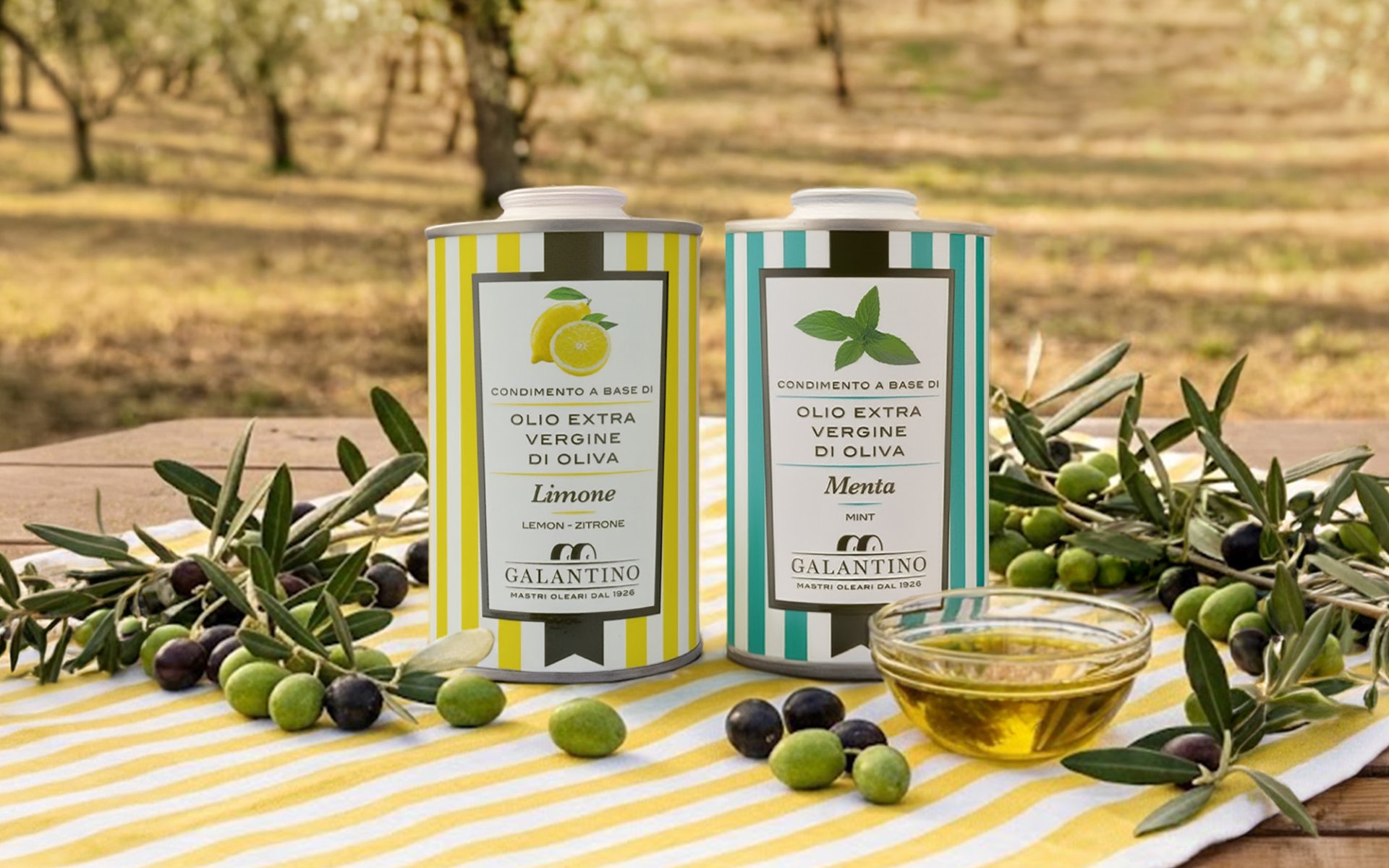
One of the brand’s distinctive product categories is its flavored olive oil. These products are made by crushing natural ingredients such as fresh lemons, chili peppers, and various herbs together with the olives during the milling process. This method allows the olive oil to absorb the aromas and flavors of the ingredients directly, without relying on artificial flavorings. Examples include Olio al Limone, or lemon-infused olive oil, and Olio al Peperoncino, or chili-infused olive oil. These products reflect Galantino’s approach of combining natural ingredients with traditional olive oil production to create distinctive flavors.
Today, the brand continues to place considerable emphasis on the design of its bottles and packaging. Some products are presented as premium gifts, including hand-painted ceramic bottles and wooden boxes containing multiple bottles of olive oil. The combination of high-quality olive oil and careful design reflects Galantino’s philosophy of elevating olive oil beyond a simple food product and presenting it as something that represents Italian flavor, craftsmanship, and cultural heritage.
In addition to its role as an olive oil producer, Galantino also opens its historic mill to visitors and those interested in olive oil. The mill, originally built in the 1860s, still preserves and displays its traditional granite millstones, allowing visitors to experience the atmosphere and history of olive oil production in the past.
During the visit, guests can watch a short film introducing the history of Galantino in a traditionally decorated underground cellar before being guided through the olive oil production process, from the preparation of the raw materials to extraction. The experience concludes with an olive oil tasting served with Bruschetta and traditional products from Puglia, such as Taralli and preserved fruits, allowing visitors to experience both the flavors and distinctive character of the local culinary culture.
For groups of 20 or more, Galantino also offers outdoor dining in the family’s orange grove, where traditional Puglian dishes prepared with Galantino olive oil are served. As a result, a visit to the mill is not limited to learning about olive oil production. It also provides an opportunity to experience the history, lifestyle, and food culture of Puglia through a culinary tourism experience that connects the story of the Galantino family with the land and traditions of the region.
Among the extensive agricultural landscapes of Puglia, the town of Bisceglie has a particularly strong connection with Italy’s olive-growing and olive oil-making traditions. It is here that the historic Galantino olive mill is located.
The 1926 Origins: Vito Galantino and the Historic Granite Millstones
The story of Galantino began in 1926 in Bisceglie, a coastal town on the Adriatic Sea in the southern Italian region of Puglia. At the time, Vito Galantino, an expert in tasting and evaluating the quality of olive oil, recognized the potential of the land in his hometown. He therefore decided to acquire a historic olive mill in the town, which had originally been built during the 1860s in the 19th century.Vito transformed the mill into a center for the family’s olive oil production, placing particular importance on preserving its traditional character and methods while continuing to develop the business. One of the most important elements preserved at the mill was its granite millstones, which were traditionally used to crush olives. This method formed an important part of the production process, helping preserve the distinctive aromas and complex flavors of the olive oil while reflecting Galantino’s commitment to craftsmanship from the very beginning.
The 1960 Milestone: Acquiring the “La Fenice” Estate
After operating for some time by purchasing olives from local farmers and producers, the Galantino family made an important decision in 1960 by acquiring a large estate known as “La Fenice.” Covering approximately 47 hectares, the estate was home to more than 15,000 olive trees, primarily varieties such as Ogliarola and Coratina, both of which are well-known local varieties with an important role in Puglian olive oil production.The acquisition of this estate marked another significant step for the Galantino family, as it allowed them to exercise greater control over the quality of their raw materials from the very beginning of the process. They were able to manage the olive trees and cultivation practices themselves, from regular pruning to the use of modern drip irrigation systems. Controlling these processes helped maintain the health and quality of the olives consistently, all of which are important factors influencing the eventual quality, aroma, and flavor of the olive oil.
Traditional Harvesting and Cold Extraction Methods
One of the characteristics that distinguishes Galantino from many other olive mills in the region is its commitment to traditional production methods, even as olive oil technology and production processes have advanced considerably. This approach reflects Galantino’s determination to preserve knowledge and techniques passed down through generations while maintaining strict quality control throughout every stage of production.During harvesting, Galantino’s olives continue to be picked by hand. The branches of the olive trees are gently shaken so that the olives fall onto nets or sheets placed underneath. This method helps minimize damage to the fruit and preserve the quality of the olives before they enter the production process. Harvesting takes place when the olives have reached an appropriate stage of ripeness, generally between October 15 and December 31 each year, with the aim of producing olive oil with a high polyphenol content and a well-developed aromatic and flavor profile.
Once production begins, Galantino continues to use traditional granite millstones to crush the olives before they undergo cold extraction and cold centrifugation. These processes help preserve as much of the olive oil’s aroma, flavor, and nutritional qualities as possible. Each batch of olive oil is then subjected to laboratory analysis as well as sensory evaluation by certified olive oil tasting experts before the final selection and quality approval.
Achieving DOP and Organic Certifications
Thanks to the attention paid to detail throughout the production process, Galantino olive oils have received several important certifications reflecting the brand’s commitment to maintaining quality and regional identity. One of the most significant is the DOP (Denominazione di Origine Protetta) designation under “Terra di Bari – Castel del Monte.” This certification indicates that the olive oil is produced within a designated geographical area and follows specific production methods and requirements established for the region, including standards relating to quality and distinctive flavor characteristics.In addition to its designation of origin, Galantino also produces certain product lines certified as organic, reflecting an approach that places importance on the cultivation of raw materials and agricultural practices in accordance with organic standards. These certifications provide consumers with additional confidence while reinforcing Galantino’s commitment to maintaining quality from the olive grove through to the finished product.
Crafting Infused Oils: A Perfect Blend of Natural Ingredients
Beyond its traditional Extra Virgin Olive Oil, Galantino has developed a diverse range of products to accommodate different tastes and culinary preferences. The company works with several olive varieties, including Coratina, Ogliarola Barese, Leccino, and Peranzana, each of which contributes distinctive characteristics to the aroma, flavor, and overall personality of the resulting olive oil.One of the brand’s distinctive product categories is its flavored olive oil. These products are made by crushing natural ingredients such as fresh lemons, chili peppers, and various herbs together with the olives during the milling process. This method allows the olive oil to absorb the aromas and flavors of the ingredients directly, without relying on artificial flavorings. Examples include Olio al Limone, or lemon-infused olive oil, and Olio al Peperoncino, or chili-infused olive oil. These products reflect Galantino’s approach of combining natural ingredients with traditional olive oil production to create distinctive flavors.
The 1980s: Brand Identity and Hand-Painted Ceramic Bottles
One of the company’s important turning points came during the 1980s, when Michele Galantino, the second-generation heir, became involved in expanding the brand’s recognition. He introduced beautifully designed and distinctive bottles for the company’s olive oils and began selling them under the Galantino name, rather than treating the oil simply as an unbranded commodity. This represented an important change, giving Galantino olive oil a recognizable visual identity and helping establish the brand in the eyes of consumers.Today, the brand continues to place considerable emphasis on the design of its bottles and packaging. Some products are presented as premium gifts, including hand-painted ceramic bottles and wooden boxes containing multiple bottles of olive oil. The combination of high-quality olive oil and careful design reflects Galantino’s philosophy of elevating olive oil beyond a simple food product and presenting it as something that represents Italian flavor, craftsmanship, and cultural heritage.
A Third-Generation Legacy and Olive Mill Tourism
Since the company was founded, the Galantino family has continued to pass the olive mill from one generation to the next. The business is now in its third generation. This continuity has not only helped preserve the family’s accumulated knowledge and experience in olive oil production but has also allowed each generation to introduce new ideas and perspectives to the business. In this way, Galantino has been able to adapt to changing times while continuing to preserve the family’s foundations and distinctive identity.In addition to its role as an olive oil producer, Galantino also opens its historic mill to visitors and those interested in olive oil. The mill, originally built in the 1860s, still preserves and displays its traditional granite millstones, allowing visitors to experience the atmosphere and history of olive oil production in the past.
During the visit, guests can watch a short film introducing the history of Galantino in a traditionally decorated underground cellar before being guided through the olive oil production process, from the preparation of the raw materials to extraction. The experience concludes with an olive oil tasting served with Bruschetta and traditional products from Puglia, such as Taralli and preserved fruits, allowing visitors to experience both the flavors and distinctive character of the local culinary culture.
For groups of 20 or more, Galantino also offers outdoor dining in the family’s orange grove, where traditional Puglian dishes prepared with Galantino olive oil are served. As a result, a visit to the mill is not limited to learning about olive oil production. It also provides an opportunity to experience the history, lifestyle, and food culture of Puglia through a culinary tourism experience that connects the story of the Galantino family with the land and traditions of the region.
Tags :
Related Content


Get to Know Giovanni Rana: From a Small Pasta Shop Delivering by Motorcycle to a Leading Global Brand